


Jana Tsoneva’s Back When People Dug Light: the Bulgarian Energy Sector from Fossil Socialism to the Green Transition and Heliosocialism (2025) is a seminal text that brings together fragments of the history of Bulgarian coal energy and coal mining on the threshold of the Green Transition. The book combines field research among miners and energy workers—opponents of the Green Deal—with archival work on experiments in the field of so-called new energy sources from late socialism. It outlines past and present alternatives to the market-mediated decarbonization of the Green Deal. Red Threads editor Rossen Djagalov asked the author a few questions about the book.
Rossen Djagalov (RLD): With the caveat that I am by no means a specialist in climate change and decarbonization and don’t have the chance to follow that scholarship or policy conversations systematically, I have to say from the outset that that your book is by far the most interesting thing I have read on the left about the transition away from fossil fuels. It faces head on the most uncomfortable questions about socialist-era environmentalism and the social costs of the Green transition and comes up with а way how the left should approach them. But before we get to them, let us start from the very beginning and orient our readers in the context out of which your study emerges. As part of the EU’s overall Green Deal and its aspiration to achieve carbon neutrality by 2050, Bulgaria’s energy sector in recent years has had to decarbonize. What were the practical implications for the lignite mines, coal power stations, and the workers they employed, most of them situated just south of my hometown of Stara Zagora?
Jana Tsoneva (JT): Thank you for the kind words about my book! To answer your question, I have to explain a bit the structure of the Bulgarian energy system. Up until recently, Bulgaria’s power mix was roughly spread between nuclear (ca. 40%), coal (ca. 40%), solar, BESS (editor’s note: short for battery energy storage systems), hydro, biomass, gas, wind and RDF making up the rest. Nuclear and coal are considered “baseload,” with coal balancing the system out. The largest coal power plant in the country (capacity: 1600 MW) is state-owned, the rest have been gradually privatized.
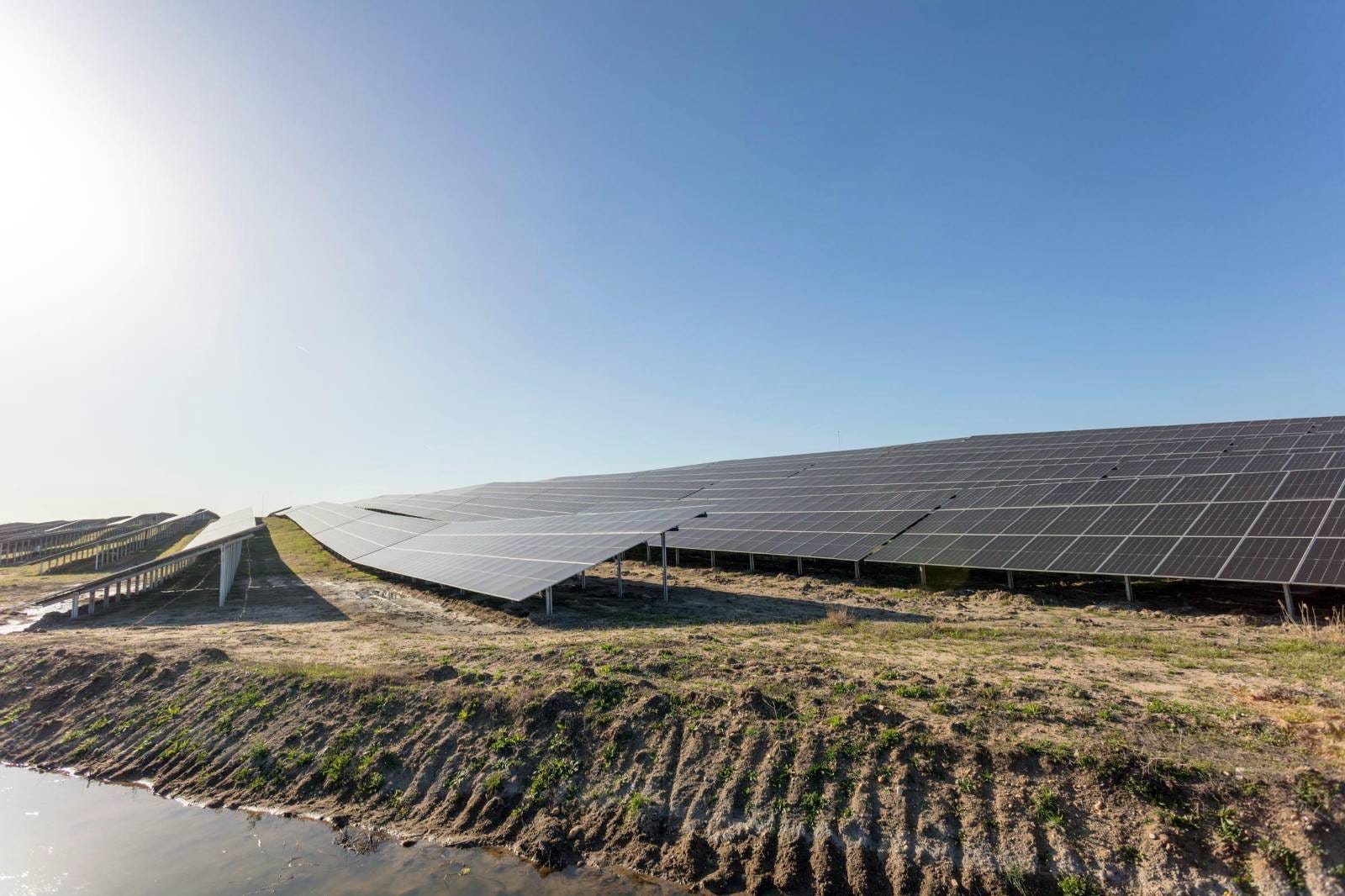
Now the share of solar has shot up to 20% on an annual basis, while in summer it often tops 50%. The practical implication for the lignite mines and the coal-fired power plants is a substantial reduction in their output over the last few years. Since 2026 there’s been another bizarre development, namely battery storage energy systems, whose share has shot up so rapidly so as to propel Bulgaria to the top places in the world in terms of share of BESS in the overall mix. Within the span of a year BESS capacity increased from a mere 200 MW to a whopping 6500 MW.
BESS and solar power work in sync—BESS mops up day-time solar surpluses that can’t be consumed or exported and then discharges for up to four hours in the evening. These systems profit from the price spread: they charge when prices are low or negative and discharge after sunset when the price jacks up. This creates big tensions within the green capitalist class because solar power owners who do not own batteries end up selling cheap and buying dear. On the other hand, BESS owners undermine the very spread their profit depends on by driving the prices down because, as I said, there’s so much investment in BESS that we might be witnessing soon a crisis of overcapacity because they all behave in the same way: discharge en masse in the evening. I am curious how this “market anarchy” will play out in the end. I have to mention that all investment in renewables and battery systems is private, but BESS exploded with the help of public funding, namely from NextGenerationEU. Until the spread of BESS, Bulgaria’s main battery was the pumped-storage hydroelectric plant, which has gone offline for a few years now—conveniently for the private sector, so the share of “public” energy vis-a-vis “private” energy has dropped. What nobody talks about in this so-called European Green Deal is the silent and wholescale privatization of the country’s energy systems—a highly ironic development given the reference to the New Deal which saw the largest expansion of the US public sector in the American economy ever. But anyway.
To your question: Both solar and BESS have carved a substantial dent in the share of coal in the mix to the point that the main coal-fired plant runs on a fraction of its capacity while several smaller ones go offline for long chunks of time in summer because emissions quotas make their output uncompetitive. (In the EU all CO2 polluters are obliged to buy emissions quotas to burn fossil fuels and these quotas keep increasing in price. As we speak, the price is over 80 EUR per tonne of emitted CO2. The rationale is to wean industries and power grids off such fuels and to nudge businesses and consumers towards renewable energy. However, as end-users, we have yet to see more affordable electricity, despite exchange prices often plunging into negative realms due to overcapacity in solar generation. Bulgaria has been and keeps being the energy-poorest member-state of the EU, in addition to being the poorest overall. Over a third of the population cannot afford to maintain adequate temperatures at home in winter and in summer.) Because energy markets are quite volatile (for example, these days the coal plants have once again regained a modicum of competitiveness in part because of gas shortages driving electricity prices up on European markets, due to the Middle East wars), workers in what used to be some of the highest paid and most secure jobs in the country are now worse off than precarious gig-economy workers, not knowing when or if the exchange prices will make it profitable to bring back the plant online. To make matters worse, the country has committed to a comprehensive coal phase-out in the next few years under the new European climate regime, and from what I’ve seen and heard, not much is offered to them by way of compensation. Big business associations admit openly that they are neither willing nor capable of matching the good salaries the miners and plant workers are used to, and it is widely expected precisely from the private sector to absorb the redundant workers. Meanwhile, policy papers drafted by highly paid foreign consultants are awash with useless recommendations to retrain workers into entrepreneurs, but this is obviously just a capitalist fantasy of a world without workers. Many workers my team and I spoke to are preparing for emigration, so much so that at one point I changed the question “how do you see yourself in 5 years?” into “where do you see yourself in 5 years?” In short, I think the resistance of these people to decarbonization is neither surprising nor unreasonable. Politicians promise well-paid jobs in the renewable energy sector but everybody knows that solar installations and BESS do not need as many workers as fossil plants. There’s an industry standard that stipulates more or less 1 person per MW of ‘manpower’. When we interviewed a 200MW solar plant manager in Stara Zagora, he admitted that he employs only 15 workers, or a whopping 0.075 workers per MW produced.
When I was writing the book, I saw that the company had listed only one job offer on their website and it was for an exchange trader in… Sofia. Many of the companies supplying panels to industrial consumers actually advertise their products as a vehicle for automation of energy production in no uncertain terms. The BESS sector (which also does not need an army of laborers) is even undergoing what I would call second-order automation because companies are reaching for AI to solve the pricing spread issue I mentioned above, by trying to devise ways for “smart” discharging and to limit competitive pressures on the evening prices.
In short, unless a country pursues a deliberate industrial policy in the sense of producing the actual renewable technologies as opposed to importing them from abroad, at the level of electricity production there’s not that much on offer for coal miners and traditional energy plant workers. And, as I briefly mentioned above, at the level of consumption, these technologies have yet to yield results that alleviate the dire energy poverty in the country. For now these technologies mainly benefit their private owners that invest in them and let’s please drop the illusions that they’re doing it for anything but for lining their pockets, still less for lofty goals like saving the climate. The fact that the most notorious coal oligarch in Bulgaria is heavily invested in renewables now should give us pause. If saving the climate was their primary objective, then these investments wouldn’t have resulted in so much deforestation and turning of fertile land over to energy production. Some of these developments are visible from space and they constantly generate protests by locals, by displaced farmers and herders, and fuel climate denialism.
RLD: In the discourse and policy-making around the Green Deal, these miners are seen as egoists, atavistically attached to an outdated technology, an obstacle to progress, to fighting climate change, and ultimately, to saving the planet. For us, this is a particularly painful contradiction, workers vs. environment, which Greens and technocratic liberals have used to portray the forces of labor and the left, in general, as something backward or at best a side-effect to be mitigated through some compensation. How do you interpret Bulgarian energy workers’ opposition to the Green Deal and their portrayal by experts and media?
JT: Well, my previous answer made clear who the real egotist is. Meanwhile the coal miners and coal plant workers have demonstrated unwavering commitment to the idea of energy as public good. They also called for a moratorium on the impending energy liberalization, citing fears that this will negatively impact ordinary consumers (businesses are already on the free market and frequently decry price fluctuations so these fears are not unfounded). Most importantly, the miners want to keep the sector public, even if it goes full renewable. They take immense pride in how their work has been absolutely instrumental in developing the country (Bulgaria was an agrarian backwater until the Communist party took over and presided over a break-neck industrialization and modernization, which pivoted on the development of the energy sector; in my book, I reach for the tired Marxist metaphor of base and superstructure and I call the energy sector “the base of the base”). Meanwhile, local politicians, energy pundits and green talking heads, who for historical reasons have been mostly right-wing liberals, chastised protesting miners for blocking Bulgaria’s Green Deal progress and more specifically disbursements from the Just Transition Fund to the tune of 1 billion euros and more. Obviously they failed to mention that this money is not going to the country’s public coffers but to private companies, in line with the neoliberal public-private partnership logics that the EU operates with. Stoyo Tetevenski has aptly called this logic “absorption [of EU funds] for absorption’s sake,” without any regard whatsoever for the social consequences of an energy translation as poorly thought out as it was hastily rushed. But yeah, the whole conversation tends to be dominated by these simplistic oppositions of:
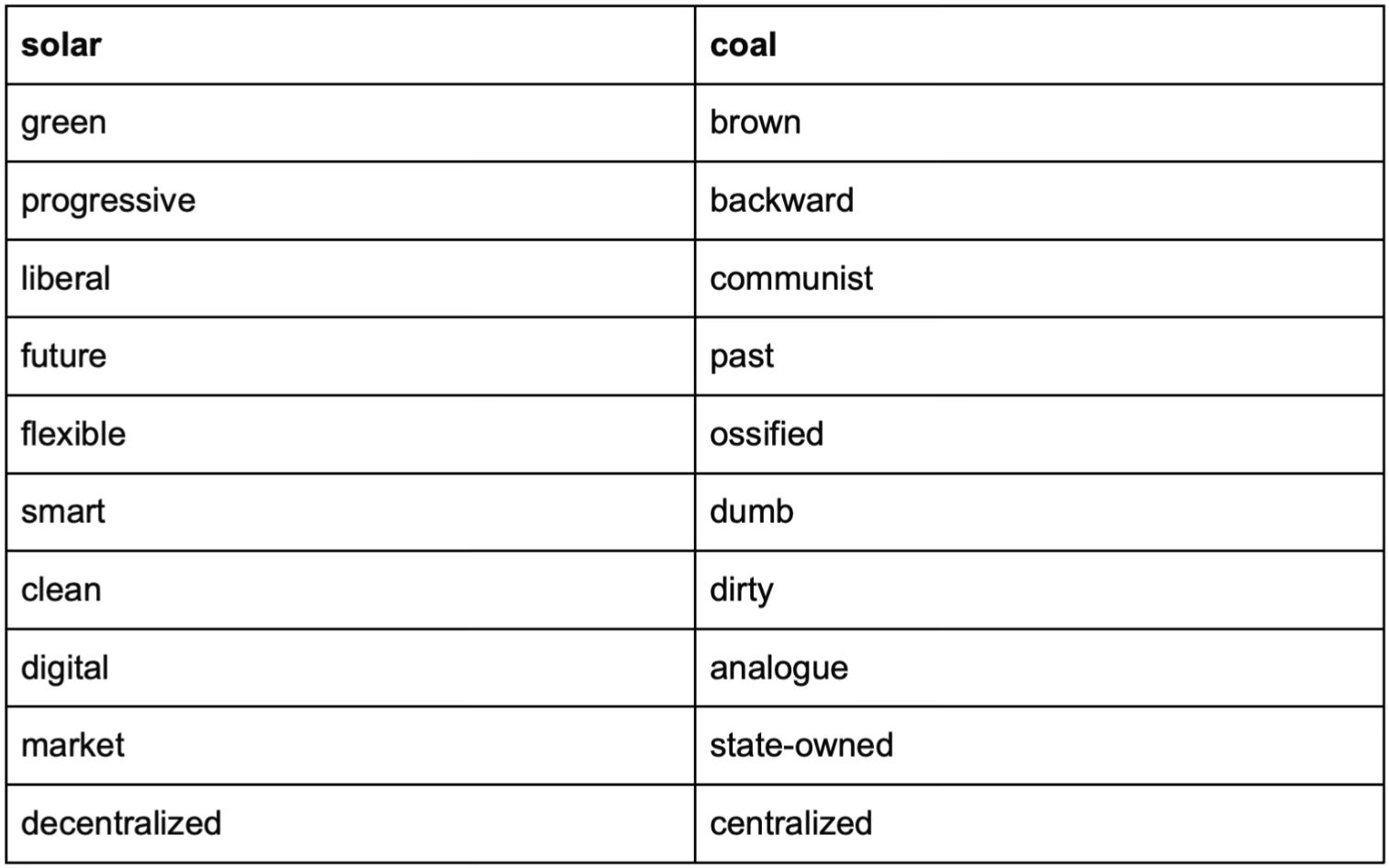
—you get the idea. My book tried to cut through the fog by showing that actually renewable energy is not the monopoly of green capitalism and there exist other ways to it that do not pass by the wholescale privatization of the country, on the other hand, and by forcing frontline workers (like miners) to foot the bill of the transition, on the other.
RLD: One of your book’s strengths is the way it toggles between past and present. In addition to portraying the social conflicts around energy today, it reconstructs the establishment of Bulgaria’s mining-coal power stations complexes during the socialist era, which though privatized and otherwise degraded, continued to provide much of the electricity Bulgarian households used in the thirty-something years since the transition to capitalism. You even come up with a term, “fossil socialism,” to indicate its specificity. But––to ventriloquize your opponents—wasn’t “fossil socialism” as polluting as “fossil capitalism,” simply another side of a destructive “fossil modernity”?
JT: Yes, it was polluting as hell but socialist industrialization had a better overall environmental track record than liberal-capitalist countries, as Salvatore Engel-Di Mauro shows in painstaking detail in his book Socialist States and the Environment: Lessons for Eco-Socialist Futures. Socialist energy production was spared some of the horrors of the industrial revolution in England and elsewhere precisely because the driving motive was not profit-making but social development. Modernity is overrated alright, and is leading us to extinction and a panoply of catastrophes, but I still insist on differentiating between capitalist and socialist modernities. So my term “fossil socialism” comes to the rescue not of modernity as such but of its socialist template. Through that term I also wanted to address a blindspot in the literature dealing with the class politics of climate change and in histories of energy transitions which as a rule prioritize the Western experience and roads to (fossil) modernity.
RLD: In your research, you uncover a major and distinct tradition of state socialist thinking about renewable energy. Could you describe some of the more important instances of it? Is there something we can still learn from it?
JT: I have to admit that this discovery surprised me immensely. Actually, this book was supposed to be a 100-or-so-page report about miners’ protests against the Green transition. Suddenly, the short desk research about the history of the energy sector morphed unexpectedly into a long rabbit hole I have yet to fully extricate myself from. I discovered a completely forgotten world of renewable energy research in the late 1970s and 1980s, triggered by the oil shocks, alright, but still holding relevant insights for our own times. For example, there were a plethora of state-owned R&D labs working in collaboration with factories on everything from solar panels to hydrogen and utterly bizarre stuff like “green coal”... There were mass produced manuals for creating solar boilers and utilizing green electricity at home. All in the name of breaking away from volatile global fossil fuel markets, as opposed to the current green transition which understands decarbonization as deepening of market-based relations + liberalization. Obviously, after 1989 this magnificent renewables infrastructure grinds to a halt under the hollowing out of the state-socialist economy via privatization. So, I don’t mean “completely forgotten” lightly: in Bulgaria the green energy discussion is obviously dominated by green liberals who act like these things started with them, after 1989. Let’s remember the simplistic oppositions listed above that shape the discussion and that make the false equivalence between anti-communism and green energy; that intone that to save the climate, one must reject the vestige of socialist industrial modernity and fully embrace green markets. My research into the domestic R&D as well as production of renewable energy tech shows that 1989 was the end-point as opposed to the start of these developments in the concrete sense of domestic production capabilities. Today, among miners, renewable technologies come off as job-destroying imports whereas once they held the promise of energy sovereignty as a vehicle for the generation of high-paying jobs. I mean, Bulgaria produced heat pumps in the 1980s! Today, this technology is so prohibitively expensive that only the rich could afford it. Revisiting these technologies helped me break open a new position in the debate: between the green-liberals’ anti-worker hubris with their market-based and technocratic “solutions” to the climate collapse, and the climate-denialist obdurance that is rife among coal advocates, including on the left. My book reeks of nostalgia for the socialist part, too, but it is a nostalgia for what Kosseleck calls “futures past” or another concept I like of “interrupted futures” that question the seemingly unshakable, unidirectional path to a climate-neutral future monopolized by green neoliberalism. It shows something simple: that installing solar panels does not necessitate the wholesale privatization and liberalization of the entire energy sector but this is precisely the false logical conclusion prescribed by the green pundits who dominate the discussion. Saving the climate need not pass through the usual profit-making channels: it’s as simple as that. Yet that’s the only “solution” drummed into our heads by the green liberals and green capitalists who do not shy away from turning even the climate crisis into yet another frontier of capital accumulation.
RLD: The left, at least in our part of the world, is so far from power that any policy recommendations would lack any addressee, but I’d still like to return to the question of today’s Green Transition in Bulgaria and beyond: is there anything the left can demand or do other than ask for compensation for the workers left behind?
JT: The left, including the radical green groups that sprang up in recent years, who break with the green liberal orthodoxy by modelling themselves after Western movements like “Fridays for future” or “Extinction rebellion” should 1) read my book! (I am only half-joking here) and 2) support the miners in their struggle against the Green New Deal even when the latter might articulate political views that offend the taste of middle-class green urbanites. I’ve been trying for years to reconcile “green” and “working-class” differences (which tend to assume manichean proportions in Bulgaria) and I believe the book offers some tentative directions out of the schism. I hold no illusions that the miners will stop, let alone reverse the onslaught of green capital, but history does not know of a better way to advance workers’ agenda and interests than strikes and protests by working-class people. And, as I mentioned, their agenda is not reducible to their jobs only as they consistently defend the public interest by insisting that energy should stay public, by describing for example how decarbonization will impact the social insurance systems (already under strain because of the gargantuan, gray economy which is a phenomenon only of the private sector!), by being almost immune to the neoliberal prescriptions for “economic development” via (the public funding of) the private sector, and so on. There’s a lot we can learn from them despite the constant efforts of the green liberals to paint them as a fossil (in both senses of the term!) of the past.
Jana Tsoneva is a sociologist based at the Bulgarian Academy of Sciences and chairs KOI, a research collective and publishing house.
