


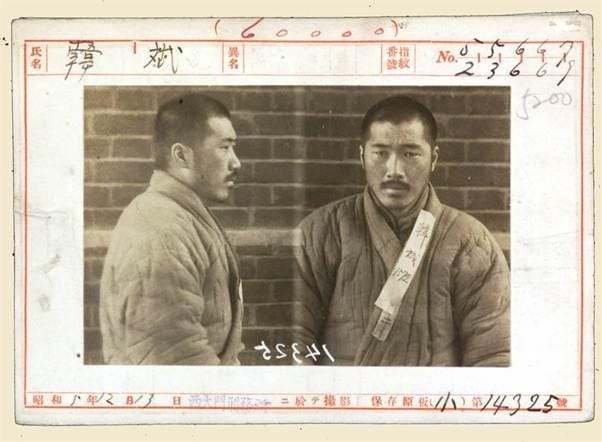
This portrait of the Korean communist Han Pin is one of many such accounts featured in Vladimir Tikhonov’s forthcoming book on the Communist University of the Toilers of the East (KUTV), Red Pilgrims: Korean Revolutionary Students in Moscow, 1921–38. Founded in Moscow in 1921, KUTV trained communist cadres for Soviet Central Asia, the Caucasus, and other non-Russian regions, while also preparing revolutionaries for the wider colonial world. This institution played a pivotal role in the Comintern’s networks linking revolutionary movements across Asia, Africa, and Latin America.
The lives of KUTV’s Korean students, the subject of Tikhonov’s study, were extraordinary. Spanning multiple countries, they were marked by imprisonment in the Soviet Union, Japan, and, later, North and South Korea; many ended in execution. Those who survived were often marginalized in both Korean states: in the South because of their communist affiliations, and in the North because they belonged to factions that lost out in the internal struggles of the communist movement. Yet these men—and some women—stood at the origins of Korean communism and played leading roles in the struggle for national liberation and independence.
As Han Pin’s story demonstrates, this struggle often entailed a transnational, itinerant existence spanning the Soviet Union, China, and Korea itself. Its protagonists were typically multilingual, often mastering Russian, Japanese, and Chinese alongside their native Korean. Their academic and teaching careers could likewise extend across continents. Han, for example, drew on the knowledge he had acquired at KUTV, Leningrad State University, and Moscow State University to teach Korean revolutionaries in China.
Although these Korean communists, shaped by the colonial era, often regarded the Soviet Union as a model for postcolonial statehood, many fell victim to the Great Purges in the USSR. Those who survived faced further persecution in both Korean states after 1945. Their lives and political trajectories deserve to be recovered from historical obscurity.
I first learned of Han Pin from the book The Untold History of the Founding of the North Korean Dynasty: The Authoritative Biography of Kim Il Sung by Hŏ Chin (1928-1997).1 Hŏ Chin, a former North Korean student who defected to the Soviet Union in 1958 in opposition to North Korea’s reluctance to accept Khrushchev’s de-Stalinization, had himself experienced North Korea in the immediate post-liberation years. He subsequently conducted extensive interviews with Soviet Koreans who had been dispatched to North Korea, gathering an enormous body of material on the early history of the DPRK (Democratic People’s Republic of Korea: North Korea), which he incorporated into his book. In his account of the so-called Yan’an faction—Korean Communists who fought against the Japanese invasion of China under direct leadership of Yan’an-headquartered Mao forces—,he placed Han Pin, orMikhail Han, fifth in its leading hierarchy.2
I could not help wondering who this Han Pin was, a man ranked alongside famous Yan’an faction leaders. What made the mystery all the more intriguing was that, despite bearing the Korean name Han Pin and the distinctly Soviet Korean-sounding name “Mikhail Han,” the Soviet Koreans dispatched to North Korea after 1945 did not recognize him as one of their own. His place of birth likewise varied from source to source: some gave Korea—Kyŏngwŏn or Myŏngch’ŏn in North Hamgyŏng Province—while others pointed to Jiandao (Kando: largely Korean-populated borderlands of South-Eastern Manchuria) or the Primorsky Region (best known for the biggest port city of the Russian Far East, Vladivostok). A book on North Korean history by my former teacher Andrei Lankov only deepened the mystery. There I encountered the story that, in the mid-1920s, Han Pin had been expelled from the Russian Komsomol for leaving the Primorsky Region for Manchuria on his own initiative, without Comintern authorization.3 I became all the more eager to find out who this transborder communist was—a man who repeatedly crossed the frontiers separating the Primorsky Region, Korea, and Jiandao.
Fortunately, I was eventually able to unravel at least part of the mystery through Comintern documents preserved in RGASPI (Russian State Archive of Socio-Political History, Moscow). When these are supplemented with materials from the Japanese colonial authorities, it becomes possible to reconstruct, to a considerable extent, the trajectory of the life of Han Pin, a revolutionary who transcended borders and nationalities. His nearly forty-year revolutionary career encompassed the Primorsky Region, Moscow, Leningrad, Jiandao, today’s South Korea, and North Korea. His geographical range was remarkable, but even more remarkable was the historical arc contained within his life. He began as an enthusiastic member of a national minority serving as a cadre of the newly established Soviet state and ended as a victim of the purges in North Korea. His life thus contains, in miniature, all the light and darkness of the twentieth-century socialist experiment.
I do not know whether he was born in Korea and moved to Russia with his family as a small child. Russian documents, however, give his birthplace as the village of Slavyanka in Minskaia County, in the Far East of the Russian Empire. He attended a Russian school in the village and graduated from a high school in Nikolsk. It is therefore reasonable to assume that Russian was virtually a native language for him. At the same time, his command of Korean must also have been at a native level, since it placed no apparent limitations on his activities in Korea. He was, in other words, an almost perfectly bilingual Korean-Russian speaker. Born on April 28, 1902, he joined the Russian Komsomol in 1920. There he held a succession of positions: head of the city committee’s propaganda department, instructor for a district committee, and head of its Korean section. He also served as a deputy to the Nikolsk City Soviet and as an instructor overseeing the payment of the tax in kind, among various other assignments.4 Looking at this extraordinary accumulation of administrative responsibilities, one gets the impression of an intellectual from a national minority who had embraced the revolution with intense enthusiasm. His father was a blacksmith, and perhaps his family and those around him quietly hoped that the revolutionary state would educate the young man into a cadre. Yet for Han Pin, “revolution” itself seems to have mattered far more than any official position.
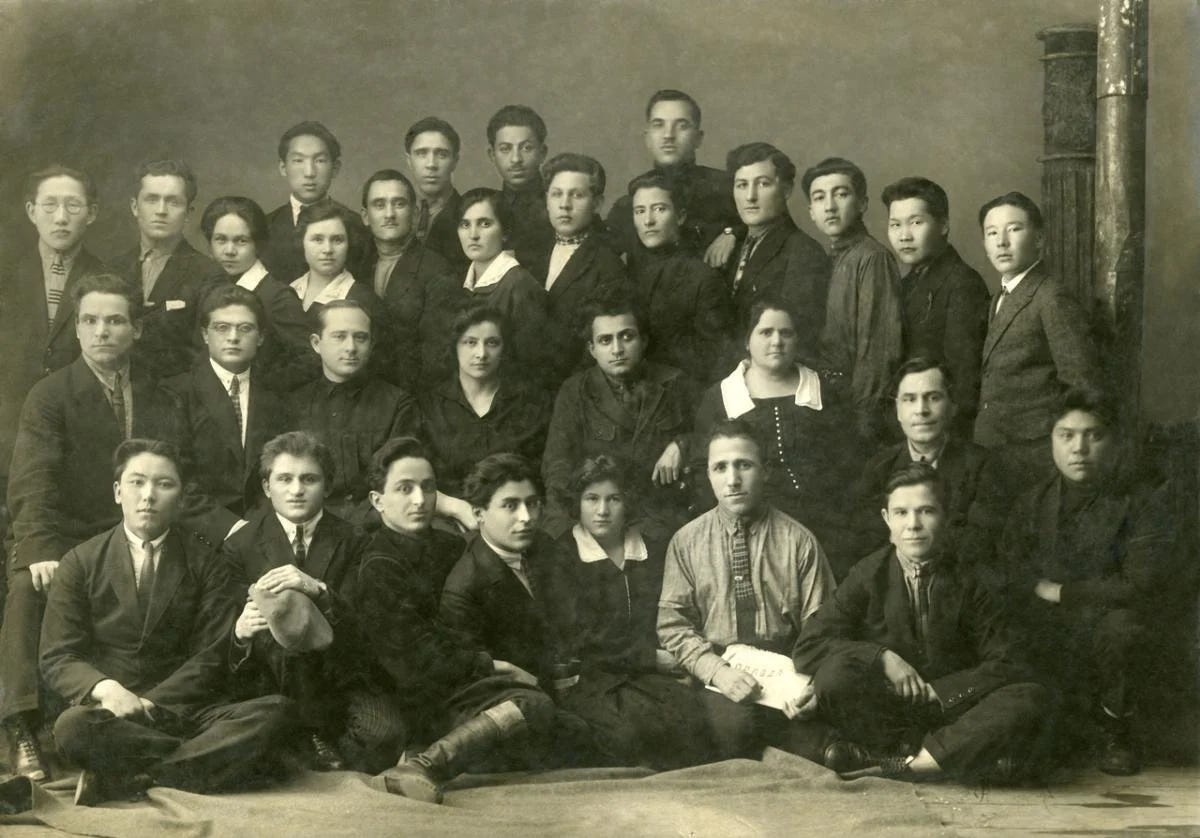
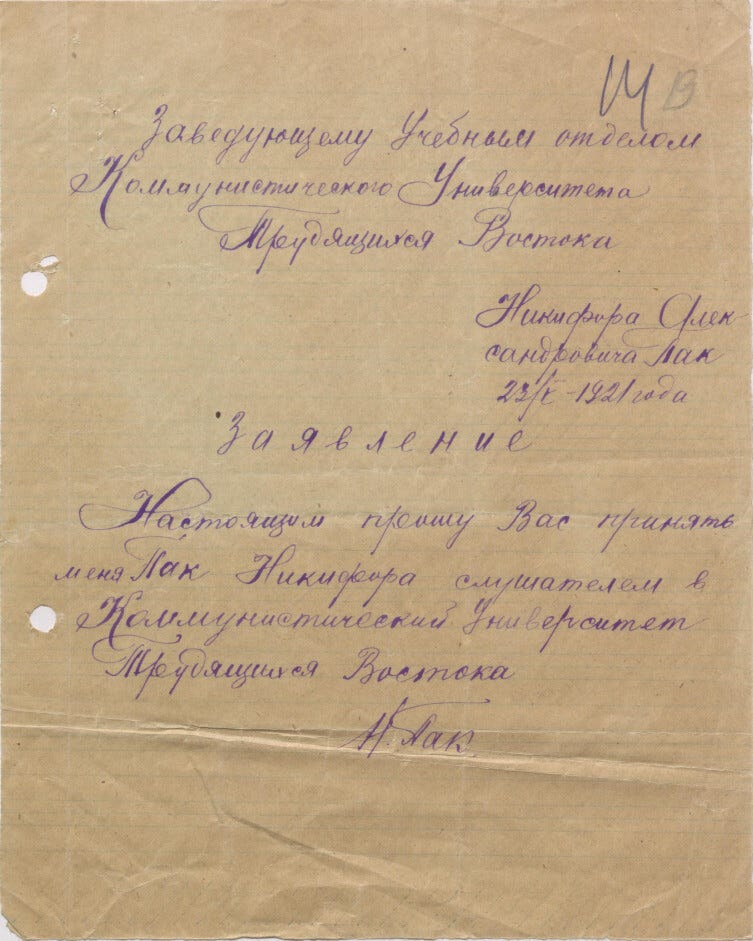
The party took note of his youthful zeal, and, in 1923, sent him to Moscow to study at the Communist University of the Toilers of the East (KUTV), an institution intended in large part to train national-minority cadres. Yet he studied there for only about a year before returning to Vladivostok.5 The 180,000 Soviet Koreans living in the city or the surrounding Primorsky Region were in urgent need of cadres who could “manage” their affairs, address their grievances, provide them with political education, and represent them before the Party and the state. The authorities could therefore ill afford to let a promising Korean cadre spend too many years pursuing his studies.
In Vladivostok, Han Pin initially worked in the city’s political and cultural department, while continuing his Komsomol activities and becoming involved in the Koryŏ Bureau, which was charged with organizing the Korean Communist Party inside Korea. But a conflict with Yi Yŏngsŏn, originally a Donbas miner of Korean ethnicity who had become one of the most powerful Soviet Korean figures in the city Party organization, soon led to his demotion to a rural schoolteacher.
He appears to have been increasingly frustrated by the early Soviet official world structured around personal patronage, networks, and relationships between patrons and clients. More than anything, he wanted to experience the “revolutionary front line” for himself. In 1925, he therefore broke with everything around him and, without obtaining anyone’s permission, crossed into Manchuria, making his way to Ninguta. The move resulted in his expulsion from the Komsomol in the Primorsky Region, but he does not seem to have regarded this as particularly important. Together with comrades such as Pak Yunse, he assumed leadership of the Manchurian General Bureau of the newborn Korean Komsomol.6
Northeastern China, where the conditions for communist activity were relatively more favourable than in Japanese-occupied Korea itself, was at that time a land of hope for Korean communists. But Han Pin had no intention of confining his revolutionary activity to Manchuria. In early 1926, he secretly entered Seoul via Vladivostok. There he became involved in the Korean Communist Party and Komsomol movements. Watching the bitter rivalry between the Seoul faction (Left nationalists) and the Hwayo or Tuesday group (orthodox Marxists-Leninists), he developed an increasingly firm conviction that the communist movement had to overcome its factional divisions. He subsequently became one of the founding members of the so-called ML (“Marxist-Leninist”) group, which sought to eliminate factionalism and unify the entire movement.7
Seoul, however, was hardly a safe place for him. Following the June 10th Movement, a massive wave of arrests swept through the city. At the end of 1926, Han Pin therefore returned to Moscow via the Primorsky Region. Beginning in December of that year, he worked as a Korean-Russian interpreter for the Comintern, serving as an intermediary between Korean communists and the Comintern.8 At the same time, he could not abandon his dream of studying. From May 1927 he attended the law faculty of Leningrad University, transferring in 1928 to the law faculty of Moscow State University.9 Koreans who studied at Moscow University, the Soviet Union’s premier institution of higher education, were exceedingly rare at the time. Han Pin was one of them.
In the autumn of 1928, together with ML leaders such as Yang Myŏng, he argued before the Comintern for the legitimacy of the Korean Communist Party’s February Party. In the end, however, the Comintern accepted the position of Kim Tanya and others and refused to recognize either the Seoul-faction-centred December Party or the ML-centered February Party. Instead, it withdrew its recognition from the Korean Communist Party and opted for its reconstruction on the basis of factory-floor cells and communist-led ‘red’ unions.10
Han Pin threw himself enthusiastically into this new campaign. In the spring of 1929, he returned once again to Vladivostok. Using the city as his base, he made repeated journeys into Northern China and directed the ML faction’s efforts to rebuild the Party. Finally, in the spring of 1930, he crossed illegally through Jiandao and entered Korea, heading for Seoul.11
He would never return to the Soviet Union.
At that time, several graduates of the Communist University of the Toilers of the East—including Pak Min’yŏng (A Soviet Korean, otherwise known as Nikifor Pak, 1904-1938), Kwŏn Ojik (1906-?), Cho Tuwŏn (1903-1953), and Kim Ŭnggi (?-?)—were energetically engaged in rebuilding the communist movement in Seoul. The Japanese police, however, were pursuing them with equal determination. Seeking to evade police surveillance and, at last, to undertake the kind of labour organizing inside Korea that he had previously been unable to carry out on any substantial scale, Han Pin left his hideout at 208 Kahoedong in Seoul and headed for Pusan. There, on March 15, 1930, the Japanese police arrested him.12
Among the Comintern representatives who had been conducting underground work in Korea at the time, Pak Minyŏng and Kim Chŏngha were fortunate enough to evade the Japanese authorities and return to the Soviet Union (both, however, were eventually executed later, during the Great Purges). In a report to the Comintern, Pak Minyŏng lamented the “immaturity of underground work” among Korean communists.13 The Japanese surveillance apparatus was simply too sophisticated to be an easy opponent.
In 1936, Han Pin was released after serving his full sentence. He then immediately went to China together with Ch’oe Ch’ang’ik, a former member of the Seoul faction of the Korean Communist Party, and Ch’oe’s partner Hŏ Chŏngsuk. He made no attempt to return to Soviet territory. Apparently, for him, the anti-Japanese revolution remained more important than holding an official position in the Soviet Union. In fact, his decision not to return to the Soviet Union on the eve of Stalin’s Great Purge of 1937–38 probably saved his life. He survived the purges in the Soviet Union, which took lives of most of his old comrades at the Korean section of Comintern, only to succumb to those that would later take place in Pyongyang.
But that was still to come.
In Nanjing, then the capital of China, Han Pin sought out the Soviet ambassador to discuss the possibility of rebuilding the Korean Communist Party. The ambassador’s response was cold. From the Soviet perspective at the time, the principle of “one country, one party” meant that Korean communists in China should operate under the leadership of the Chinese Communist Party. At the same time, a united front was necessary in the struggle against Japanese imperialism.
In accordance with this logic, Han Pin, Hŏ Chŏngsuk, and Ch’oe Ch’angik joined Kim Wŏnbong’s (1898-1958) Korean National Revolutionary Party. Within this Left-nationalist organization, socialists and nationalists could work together for national liberation while coordinating their efforts with China’s anti-Japanese struggle.
Han Pin’s exile in China came at a particularly politically charged moment. On July 7, 1937, Japan launched its full-scale invasion of China, bringing the Pacific War into a new phase. Faced with an increasingly desperate military situation, the Chinese Nationalist government decided in September 1937 to establish a special Korean class at the Central Army Officers’ Academy, providing military training to young Korean exiles. At the Central Army Officers’ Academy in Jiangxi Province, roughly one hundred Korean youths—including Kim Hakch’ŏl (1916-2001), who would later become a well-known writer—began training alongside their Chinese counterparts.
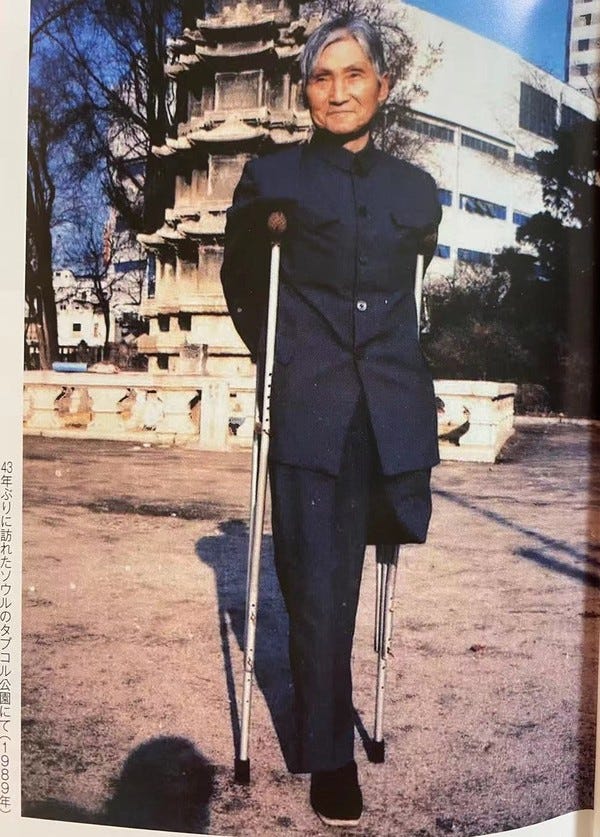
Han Pin was assigned to teach them political economy, although the subject was in practice the history of the international communist movement. The knowledge he had acquired at the Communist University of the Toilers of the East and at the universities in Moscow and Leningrad was now being put to use in a Chinese military academy. With broad United Front coalitions becoming the defining political imperative of the period, the Korean National Front Federation was established in December 1937 under the leadership of the Korean National Revolutionary Party. Han Pin became head of its political department.
Yet United Front policies were difficult, both on the Chinese side and among the Koreans. Conservative nationalists established the Korean Independence Party and the Korean Liberation Army in 1940, while the socialists within the National Revolutionary Party likewise began moving toward an independent political organization. While struggling together against the Japanese invasion of China, Korean nationalists and socialists had developed completely different political affiliations. In the summer of 1940, Han Pin and his comrades left the National Revolutionary Party and established the Korean National Liberation Struggle League in Luoyang.
Politics meant little at the age of war without an armed force backing the politicians. The armed force of the Left was the North China Detachment of the Korean Volunteer Corps, commanded by communist cadres. Han Pin moved north with them, making his way to the Taihang Mountains. There, in a mountain massif stretching along the eastern edge of the Loess Plateau in Shanxi, Henan and Hebei provinces, Chinese Communist guerrillas were engaged in resistance. Koreans were to assist them, in particular with information gathering and propaganda vis-à-vis Japanese soldiers: many Koreans were proficient in Japanese, the official language of the colony. Han Pin served as an instructor at the Korean Volunteer Corps Cadre Training Class, the future Korean Youth Revolutionary School. At the same time, he became vice-chairman of the North China Korean Independence Alliance, the political organization of the Korean Volunteer Corps, established in 1942. Together with Ch’oe Ch’ang’ik, Kim Tubong, Yi Sangjo, and others, he participated in guerrilla warfare. Koreans went on reconnaissance missions, broadcasting anti-war propaganda through loudspeakers close to the Japanese lines and assisting the interrogations of Japanese prisoners of war. At the same time, they began thinking ahead to the post-liberation future. Independence Alliance leaders even sent an intermediary to Yŏ Unhyŏng (1886-1947), an influential leftist leader, in Seoul, working with an eye not only to liberation from Japanese rule but also to the founding of a new Korean state that would follow the collapse of the Japanese Empire.14
Then liberation came in August 1945, and with it the moment of founding a new Korea. Yet the reality that confronted Han Pin was very different from the future he had imagined. The Soviet forces occupying Manchuria and northern Korea first disarmed the Korean Volunteer Corps and only subsequently permitted its members to enter North Korea. Under Soviet military rule, the emerging political order in North Korea was built primarily around three groups: former members of Kim Il Sung’s 88th Independent Brigade, who had served in the Soviet military, Soviet Korean cadres dispatched directly from the Soviet Union, and figures from the “domestic faction” who appeared to possess influence inside Korea itself.
Although Han Pin was originally of Soviet Korean background, by the time he entered North Korea, he was no longer regarded as a Soviet Korean. Apparently, while working for Comintern in the 1920s, he never even bothered to formally obtain Soviet citizenship (in the Tsarist era, ethnic Koreans of the Russian Far East for the most part were not Russian subjects; they had to apply for citizenship individually and mostly did so in the 1920s). He had become classified as a member of the Yan’an faction—a politician who had fought in China under the leadership of the Chinese Communist Party.Yet the Yan’an faction was closer to being a guest than a master in the newly independent Korea.
Ch’oe Ch’ang’ik, Kim Tubong, and Han Pin joined not the Communist Party but the Korean New Democratic Party (Chosǒn Sinmindang). Their task was to absorb leftists and unaffiliated figures who were sympathetic to Communism but not necessarily Communists themselves. In 1946, their New Democratic Party eventually merged with Kim Il Sung’s dominant Communist Party to form the Workers’ Party of Korea, the backbone of the fledgling party-state.But Han Pin found himself far down the hierarchy of the new party’s Central Committee.
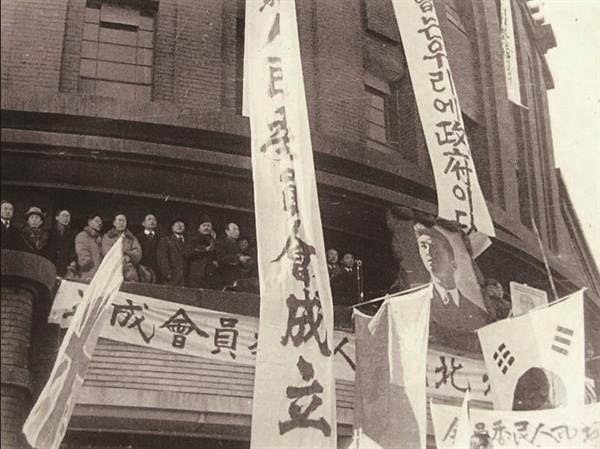
For the Soviet military administrators who exercised decisive influence over North Korean politics, men like Han Pin—who had spent many years acting independently in China, beyond direct Soviet supervision—were more troublesome and burdensome than Kim Il Sung, who had only recently emerged from a Soviet military uniform. Even Han Pin’s command of Russian at a native level and his academic record from the best Soviet universities did little to help him. Still, within the founding elite of North Korea, Han Pin was one of the very few former students of Moscow State University, the Soviet Union’s premier institution of higher education. Perhaps for this reason, he was occasionally entrusted with academic—rather than political—responsibilities.
When Kim Il Sung University was established in Pyongyang in October 1946, Han Pin became its vice-president. One of the people closest to him at the time was Kim Hakch’ŏl, who had once been his student in China. The conversations between the two men, later recorded in Kim Hakch’ŏl’s memoirs, reveal that both remained deeply committed to the theoretical ideal of socialism while feeling considerable unease about the new order being constructed under Soviet military rule and around Kim Il Sung.15
Indeed, by the time Han Pin had left the Soviet Union for good in 1930, the Soviet reality was already considerably removed from the socialism he imagined as a youthful Comintern activist of the 1920s. Yet there is little reason to think that he could have fully understood the significance of the conservative Stalinist turn of the late 1920s at the time. His main preoccupation, after all, was the liberation of Korea and building a new, post-revolutionary society, broadly along the lines of the Soviet model. His exasperation with Soviet bureaucratism notwithstanding, neither he nor Kim Hakch’ŏl could find any practicable model of post-revolutionary statehood superior to the Soviet one.
After leaving his position as vice-president of the university, Han Pin eventually became director of the Central Library in Pyongyang. It remains unclear whether he stayed in that position until 1954, or whether he was purged after the 1956 “factional incident” together with Ch’oe Ch’ang’ik and others.16 Kim Hakch’ŏl wrote that Han Pin was deported to the Soviet Union in 1954, but no corresponding record has yet been found in Soviet documents.
What is certain is that by the mid-to-late 1950s he had fallen out of North Korea’s ruling elite. In 1958, Kim Il Sung already referred to him as a supposed failed instigator of a “military coup,” no less.17 It would be safe to assume that, by that point, Han Pin was most likely already dead or incarcerated for the rest of his life.
A revolutionary not only in his theory and practice but also by temperament, Han Pin was poorly suited to the command-and-obedience bureaucratic order of post-revolutionary North Korea. He belonged to a non-mainstream faction targeted by Kim Il Sung for elimination in the late 1950s and was personally critical of Kim’s rule. He was therefore particularly vulnerable to being eliminated in the internal struggles of the Kim Il Sung-dominated bureaucratic world.
For decades, he had crossed the borders between the Soviet Union, China, and Korea in pursuit of the liberation of both nation and class. Yet instead of national liberation, a divided Korea emerged; instead of class liberation, a new hierarchy of statuses began to take shape in the North within the emerging order of national division.
The old revolutionaries had little choice but either to adapt to this new reality or to be cast aside.Han Pin was cast aside—and then disappeared. Perhaps, in the end, this was a more fortunate fate than surrendering his own dream and spending the rest of his life serving the new “Great Leader.”
Might North Korea’s non-mainstream revolutionaries, such as Han Pin, have constructed a political order qualitatively different from Kim Il Sung’s Stalinist party-state, governed by a nomenklatura? A different leader—for instance, from the Yan’an faction—might have been less repressive and less inclined to cultivate an extravagant personality cult than Kim. Yet none of the plausible alternatives was likely to question the fundamental tenets of Stalinist statehood, including the party-state’s top-down control over society. O Kisŏp (1903–?), another communist educated at KUTV, went so far as to argue that trade unions should defend the interests of the working class rather than merely serve as instruments of state industrial policy.18 This position was severely criticized and contributed to O’s removal from the Workers’ Party Central Committee.19
Few North Korean leaders, trained as they were in the organizational and administrative practices of the Soviet and/or Chinese Communist parties, would have been prepared to make more radical propositions, particularly given North Korea’s dependence on the Stalinist Soviet Union during the early Cold War. Even if Han’s Yan’an faction comrades or other opponents of Kim Il Sung had somehow managed to seize power of the North Korean state, the broad trajectory of North Korean history might have been little different. Perhaps the deepest tragedy of this story lies in the practical constraints that twentieth-century global historical conditions imposed on the realization of Han’s original socialist vision for Korea.
Vladimir Tikhonov is Professor of Korean Studies at the University of Oslo and President of the Association for Korean Studies in Europe (AKSE). His research focuses on Korean history, communism, Marxism, and the intellectual history of East Asia; he also writes a Korean-language blog at blog.naver.com/Vladimir_tikhonov
The original title in Japanese is: Im Un. Hokuchōsen ōchō seiritsu hishi: Kin Nichijō seiden [The Untold History of the Founding of the North Korean Dynasty: The Authoritative Biography of Kim Il Sung]. (Tokyo: Jiyūsha, 1982). I also consulted a later Korean translation: Im Ŭn. Pukchosŏn ch’angsŏl chuyŏg i ssŭn Kim Il-sŏng chŏngjŏn [The Definitive Biography of Kim Il Sung Written by a Principal Actor in the Founding of North Korea]. (Seoul: Okch’on Munhwasa, 1989), p. 161.
He was placed immediately after General Mu Chŏng (1904-1951), Kim Tubong (1889-1960), chairman of the Korean Independence Alliance, Pak Ir’u (1903-1955), political commissar of the Korean Volunteer Corps, and Ch’oe Ch’ang’ik (1896-1957), vice-chairman of the Korean Independence Alliance.
Andrei Lankov, From Stalin to Kim Il Sung: The Formation of North Korea, 1945–1960 (London: Hurst & Co., 2002), p. 113.
“Han Mikhail: Oprosnyi list studenta” [Han Mikhail: Student’s Questionnaire]: RGASPI f. 495 op. 228 d.13, l. 005-7.
This is mentioned in a report sent by Chu Ch’ǒngsong, Kim Hoban, Nam Chunp’yo and Pyotr Pak to the Far Eastern Bureau of the Young Communist International, RGASPI f. 533 op. 10 d.1887, l. 0059-69.
See a transcript of his interrogation by Japanese colonial police: Shisō mondai ni kansuru jōhō tsuzuri, dai 5-satsu. Keijō keikō hi dai 7404-gō. Kaigai sen’nyū Chōsen Kyōsantōin kenkyo ni kansuru ken [File of Information Concerning Ideological Problems, Vol. 5. Keijō Police High Confidential Document No. 7404: Concerning the Arrest of Korean Communist Party Members Who Infiltrated from Overseas]. Keijō, May 26, 1930. Available at: https://db.history.go.kr/modern/level.do?levelId=had_333_0830. Pak was later accused of “Trotskyism” by Comintern authorities—at that point, in the mid-1930s, he was out of their reach, in Manchuria, so the accusation did not have immediate grave consequences for him. Perhaps both Pak and Han were indeed somehow influenced by Trotsky’s critiques of Party’s bureaucratization. They, however, steered clear of any contacts with Left Opposition. They needed the might of the Soviet party-state to liberate Korea from Japanese colonialism, first and foremost.
Pak Yunse, “Fraktsiya Korburo” [Korean Bureau Faction], January 15, 1935: RGASPI f. 495 op. 228 d. 430, l. 0037. On this group, see: Suh, Dae-Sook, The Korean Communist Movement, 1918–1948 (Princeton, NJ: Princeton University Press, 1967), p. 155.
“Spravka, 07.02.1927” [Certificate, February 7, 1927]: ]: RGASPI f. 495 op. 228 d.13, l. 003.
It is mentioned in a request by Korean Communist Party and Communist Youth League representatives (Kim Ch’ǒlsu and Kim Kang respectively), May 3, 1927, RGASPI f. 533 op. 10 d.1897, l. 0050-50v.
On this decision, see: Chŏn Myŏnghyŏk. “Kominthŏnŭi 12wŏl kyŏlchŏng kwa Chosŏn Kongsandang chaegŏn undong: Tang undong esŏ se kae ŭi kyŏnhyang ŭl chungsimŭro” [The Comintern’s December Decision and the Reconstruction Movement of the Korean Communist Party: Three Tendencies within the Party Movement]. Yŏksa yŏn’gu 54 (2025): 115–165.
Shisō mondai ni kansuru jōhō tsuzuri, dai go-satsu. Keijō keikō hi dai 7404-gō. Kaigai sen’nyū Chōsen Kyōsantōin kenkyo ni kansuru ken.
Ibid.
On their return, see: Vladimir Tikhonov, “Kim Jeongha (金鼎夏, 1898–1938), an ‘Unreliable’ Revolutionary” Seoul Journal of Korean Studies 39, no. 1 (2026): 149–178.
In compiling this account, I have relied on Yŏm Inho, Chosŏn Ŭiyongdae·Chosŏn Ŭiyonggun [The Korean Volunteer Corps and the Korean Volunteer Army] (Ch’ŏnan: Tongnip Kinyŏmgwan Han’guk Tongnip Undongsa Yŏn’guso, 2009).
Kim Hakch’ŏl, Hang-il tongnipgun ch’oehu ŭi pundaejang: Kim Hakch’ŏl chasŏjŏn [The Last Squad Leader of the Anti-Japanese Independence Army: The Autobiography of Kim Hak-ch’ŏl] (Seoul: Munhak kwa Chisŏngsa, 1995).
For the failed attempt by Yan’an faction and some Soviet Koreans to dislodge Kim Il Sung from power in 1956, see: Andrei Lankov, Crisis in North Korea: The Failure of De-Stalinization, 1956 (Honolulu: University of Hawaiʻi Press, 2005), pp. 121-136.
Sŏ Tongman, Pukchosŏn sahoejuŭi ch’ejeyŏngnipsa, 1945–1961 [The Formation of the Socialist System in North Korea, 1945–1961] (Seoul: Sŏnin, 2005), p. 777.
O Kisŏp, “Puk Chosŏn imsi Inmin Wiwŏnhoe Nodong Haengjŏng Wiwŏnhoe Sŏngmyŏng” [Statement on the Mission of the Labor Administration Bureau of the Provisional People’s Committee of North Korea], 1947, In Pukhan kwan’gye charyojip [Collection of Materials on North Korea], 13, (Kuksa P’yŏnch’an Wiwŏnhoe, 1982), pp. 188–192.
Yea Tae-yŏl, “Haebang ihu Pukhan ŭi nodong chohap sŏnggyŏk nonjaeng kwa nodong chŏngch’aek t’ŭkjil” [Debates over the Character of Trade Unions and the Characteristics of Labor Policy in North Korea after Liberation in 1945], Yŏksa wa hyŏnsil, no. 70 (2008): 207–245.
