


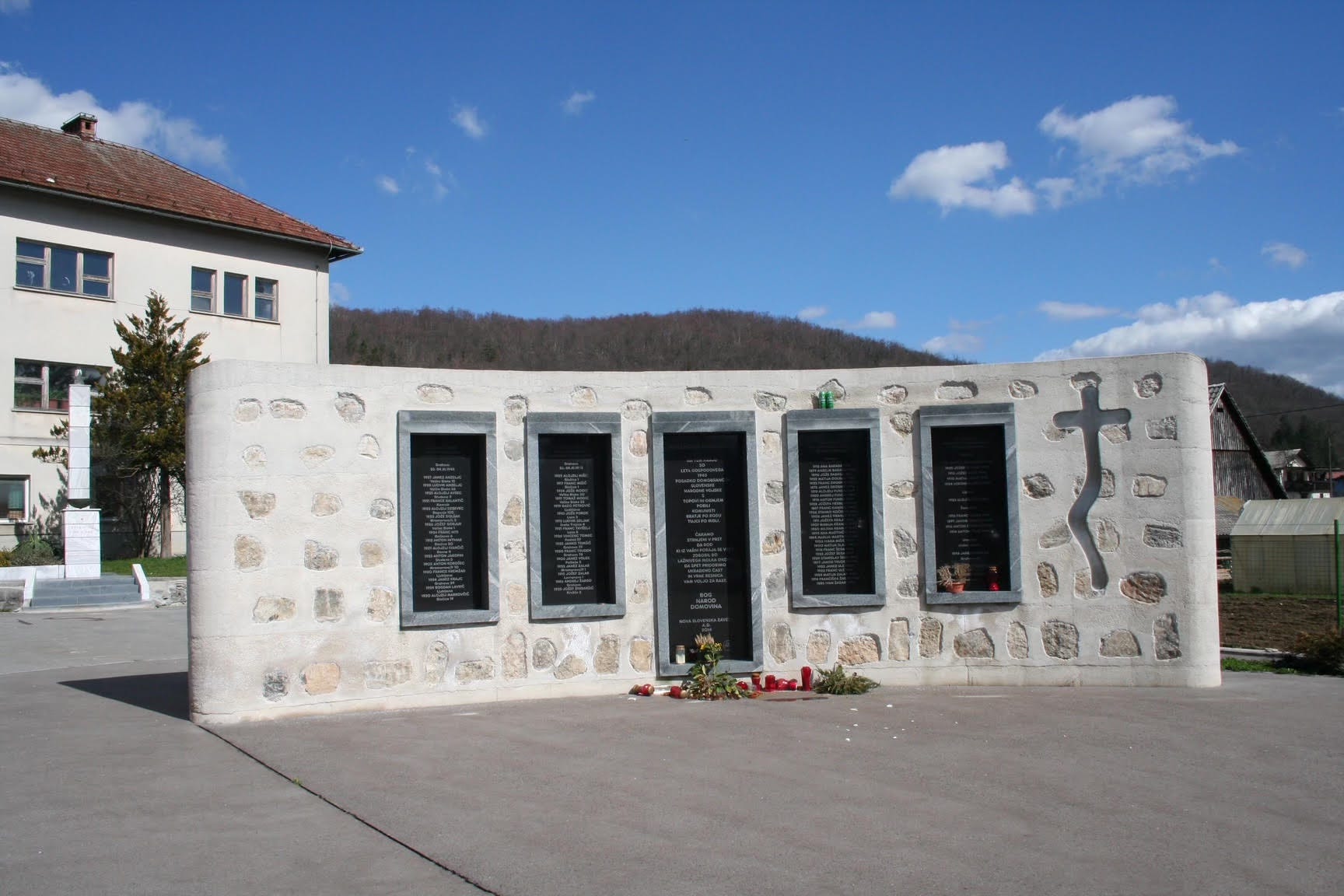
Reconciliation as a concept and strategy of subjectification belongs to the field of morality, historically to the field of Christian morality. How to reconcile with the world, with one’s sinful actions, what conditions are sufficient for forgiveness, and who should forgive these actions, the perpetrator himself, the victim, the community, the priest, the Church or God - all these have remained extremely important theological questions of spiritual authority, onto which also the link between moral economy and (re)production of wealth of temporal authority was based. Thus, reconciliation has deeply influenced the strategy of contemporary memory strategy and has once again shown that this discourse has never been a simple individual matter, but rather deeply invested in dominant power relations, moral ideology, and economy.
The Slovenian transition to capitalism in the 1990s has boasted a few distinctive features: it did not undergo bloody ethnic wars, it was gradual and social democratic, and the consolidation of the new political class happened through the discourse of national reconciliation. It is this last aspect that I will address in this short text. In Slovenia, despite being largely seen as an atheistic and Catholic country, where Church and State were officially separated, the Church has gained renewed ideological and economic power in the postsocialist period, as has been the case throughout East Central Europe.
What were the key parameters of national reconciliation in Slovenia, which allegedly, like a good disciple of German memory culture, cultivated a civilisational climate in which past wounds of the twentieth century could be properly addressed and commemorated? I will show that rather than being a moral-memory laboratory of intellectuals and cultural-memory workers, national reconciliation in both the late socialist and postsocialist periods played three vital – and problematic – historical roles in Slovenia. First, before and during the transition from socialism to capitalism, national reconciliation acted as one of the key ideological appeasements and erasures of class antagonism. Second, reconciliation enabled the consolidation – without lustration – of parts of the new and old political class during the transition itself. Thus, a new transitional elite united under the banner of national reconciliation, which consequently became the ideology of the ruling class (Močnik 2003). And third, instead of the memory of World War II, which in Yugoslavia focused on the victory over Nazism and fascism, in Slovenia, reconciliation shifted focus to the crimes of the so-called totalitarian regime and the catastrophe that Yugoslav socialism supposedly represented for the Slovenian nation.
National reconciliation was embedded in a broader social process that I have called, elsewhere, the “primitive accumulation” of nationalist memory and capital (Kirn 2022). This process began in the second half of the 1980s and operated dialectically: the war of memory was set up with the aim of nullifying/demonizing the anti-fascist consensus and the unity of socialist Yugoslavia, while creating a new nationalist imaginary. The “invention of national traditions” (Hobsbawm and Ranger 1988) and the establishment of nationalist “places of memory” (Nora and Kritzman 1996) became the key cultural and political work of conservative intellectuals who began to revise the public memory associated with World War II and the partisan anti-fascist period. Public memory was structured around the federal, self-governing, and anti-fascist legacy, which nationalist actors, especially in Slovenia and Serbia, attacked in the 1980s by exposing partisan crimes. Defeated former fascist collaborators were placed in the position of new national victims and even rehabilitated as the only true patriots. This war of memories served as ideological fuel, which was then instrumentalized by political elites to exacerbate political conflicts and mobilize people in interethnic wars in the 1990s (Kirn 2022).
Yugoslav socialism was not a paradise on earth, despite its differences with other socialist countries, its historical achievements in education, social infrastructure, and services, and its experimentation with workers’ self-management, which achieved relative socio-economic prosperity and workers’ participation in the sphere of (re)production. The political structure of Yugoslav self-management was quite authoritarian. Focusing for a moment on the field of public memory, the main political and cultural institutions invested effort and resources in remembering and commemorating the partisan and anti-fascist heritage, which was considered the foundation of the new socialist and federal Yugoslavia. The commemorative formula of mourning the victims of occupation and collaborationism, on the one hand, and celebrating the victory of the partisan liberation struggle on the other, was culturally embodied in a wide range of practices, museums, monuments, and cultural artifacts. The centerpiece of that memory culture was the Yugoslav partisan anti-fascist resistance – mostly organized by communists, the Anti-Fascist Front of Women, and the Democratic Left Forces, – which managed to liberate Yugoslavia on its own, was an integral part of the official constitution of socialist Yugoslavia and formed its ideological and political basis. By the 1980s, a slow process of mythologizing and oversaturation of the narrative and representations of the partisan past led to anti-fascist politics becoming emptied out of content. By the middle of the decade, the fundamental structure of socialist Yugoslavia, which was based on inter-republic solidarity (preventing the growth of inequality between republics) and a common memory of the partisan anti-fascist past, was also thoroughly challenged and eventually destroyed.
Civil society during this period did not function exclusively as a progressive and democratic force; indeed, it was also very reactionary, especially within the cultural elite (Dragović-Soso 2014). Anti-socialist, anti-Yugoslav, and (extreme) nationalist positions were articulated in the socialist republics of Serbia and Slovenia. When major strikes of workers emerged in Kosovo, dissent was met with a wave of police repression. Most notably, what started as a protest based on socio-economic grievances in the aftermath of austerity politics was immediately translated into nationalist terms (Magas 1994). Right from the start, it was precisely conservative intellectuals from the Scientific Academies in Slovenia and Serbia who were the first to create nationalist “dissident” texts and declarations in 1986–87, with which they articulated nationalist sentiments and called people to “arms,” weaponizing nationalist past and victimhood (I return to this below). Various intellectuals, writers, and poets spoke of the preservation and defense of the “national being” and emphasized the eternal national role of the victim now increasingly felt under communist rule. These were the alarming signs of the early period of memory wars. The first target was Yugoslavia and its shared collective memory of anti-fascist struggle and international solidarity. The increasing investment in national imaginary took place alongside the power struggles between the republican/national fractions of the League of Communists and the dismantling of economic solidarity between workers and republics with the help of commercial banks and international credit institutions. The latter forced republican leaders - especially those from the rich “North” - to make calculations based on their own national interests and to gradually move away from the federal model of Yugoslavia.
The increasing nationalization of the public sphere and public memory took place in the late 1980s, when democratic and socialist initiatives, as a form of internal critique, was hegemonized by nationalized civil society, and heavily backed by conservative agents, such as the Catholic Church in Slovenia. These ideological moves were accompanied by calls to defend the national future. Before socialism withered away with the transfer of social property and the dispossession of the working masses, Yugoslavia and its antifascist legacy needed to be destroyed. This is where we can observe how ideology and within it, the memory wars, formed the core of the violent processes very much internal to the logic of what Marx called the “primitive accumulation” of capital. What emerged in the early 1990s, I argue, was “war capitalism,” a form of capitalism that managed to mobilize society and military forces for war, especially through the primitive accumulation of memory, as explained in more detail below. This kind of war capitalism caused at first all-encompassing deaccumulation of social capital and the disintegration of other modes of production and exchange that had been established during self-management in Yugoslavia. The transition to liberal democracy and capitalism here fully draws on a paradox of “primitive accumulation” of capital: how else but through utter violence, destruction, ruination of the social infrastructure and people, and with it de-industrialisation of formerly coordinated political economy, can we understand the specificity of the Yugoslav transition? One can observe this destructive policy of physical waste and symbolic destruction on three fundamental levels: 1) symbolic violence against emancipatory ideas associated with Yugoslav federalism, non-alignment, socialist self-management, and gender and ethnic equality; 2) symbolic and real violence against (working) people who, due to their localization, beliefs, or other reasons, resisted transformation into ethnic subjects (of the new nation-states); and 3) violence against the infrastructure, property, and social fabric that were created, accumulated, and became social property under socialism.
Instead of the more conventional path of neoliberal shock therapy, where primitive accumulation of capital in the former Eastern Bloc progressed through the swift exchange of ownership and the expropriation of enterprises, the state, land, and the public sector, in the post-Yugoslav space, war capitalism left behind enormous destruction. The most primitive side of capital accumulation can be found in the force of deaccumulation of the former social assets and infrastructure of the self-governing society in Yugoslavia. Class racism, national hatred, memory wars weaponizing across the whole country in the times of prolonged crisis of the 1980s resulted in wars that prepared the path to ground zero, to terra nullius post-Yugoslava, onto which the ethnically cleansed nations and their atomised citizen-subjects could start searching for their happiness, possibly reconciled with a string of sins, war crimes, catastrophes, and increasing debts. Wars and at first transitions to nationally owned enterprises (social property was first nationalised in the post-Yugoslav context, and later privatized, to different degrees and at speeds) contributed to the collapse of social security and what formed the “socialist market” (Kirn, 2019), with its specific protected institutions and time regimes. The 1990s not only led to the bankruptcy of many enterprises and factories, but also to a dizzying increase in unemployment. The consequence of these most primitive forms of accumulation of capital was first of all the intensive accumulation of a huge and cheap “reserve army” of labor, either mobilized for war, prepared to migrate, or ready to work in the privatized sectors of the economy under the hegemony of autonomous capitals. The experience of the post-Yugoslav transition could be described as a striking example of the “development of underdevelopment” (Frank 1967), where the majority of people fell massively behind the productivity and standard of living of 1980s Yugoslav socialism.The underdevelopment was not merely an absence of growth due to war, but an active, structural dismantling of industrial infrastructure, the liquidation of socially-owned enterprises, and the deliberate erosion of the productive capacities that Yugoslav self-management had, however contradictorily, built over decades. Factories were shuttered, workforces dispersed, and entire branches of regional industry rendered obsolete not by market competition but by the political logics of privatisation and external conditionality. What was inherited as a relatively industrialised, regionally integrated economy was disaggregated into a series of dependent, deindustrialised peripheries oriented toward consumption and extraction rather than production. Capitalist transition was, as Boris Buden would call it, an unfolding of catastrophe (Buden 2020).
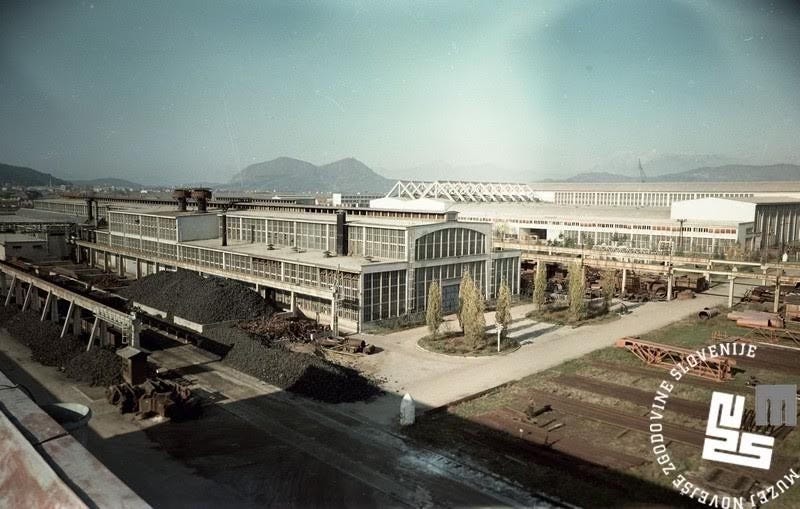
Instead of the old and emptied-out socialist slogan of brotherhood and unity, the slogan of national unity prevailed in the post-Yugoslav space. The mobilization of people for war took place in the name of one nation in one state, and did not follow any rational economic formula. The disintegration and subsequent wars had an extremely negative impact on the economies of these new states. Transitological discourse described this irrational and violent process as “catching up with the West” (Buden 2020, 158), while heavily invested in the imaginary of a national glorious past and future. After the complete destruction of socialism and of Yugoslavia, we can speak of the subordination of new nation-states to the logic of the capitalist economy. In this respect, the post-Yugoslav specificity and transition to capitalism reverse the old Marxian dictum of “economic base determining (ideological) superstructure.” The horrific aspects of the ideological wars and political hegemony of nationalist agents were central for the transition to capitalism.
Memory war: national reconciliation does not calm down the disputed memory, but accumulates violence
As explained elsewhere (Kirn 2022), the wars of memory were articulated with the nationalist and liberal ideology that reigned supreme in the late 1980s. Moreover, nationalist ideology was not something that could be ascribed to the “backward” masses or the rural areas of Yugoslavia, as is typical for the liberal retrospective justification, but was articulated by the core of the cultural and political elite of the late 1980s. Memory wars gave fuel to (inter)ethnic wars, weaponising national victimhood and accumulating series of new injustices and harmsPrimitive accumulation of memory involves the imposition of a long-term ethno-nationalist narrative about a specific heroic and, in many cases, victimized nation. In the mid- and late 1980s, this was realized by reactionary intelligentsia, political figures, and representatives of the church. The most important debates that openly welcomed the nationalist imaginary and the legitimizing narrative of one nation in one state were the memorandum of the Serbian Academy of Sciences and Arts in 1986 and the 57th issue of Nova Revija in Slovenia. Speeches that appropriated specific commemorative events and helped establish new nationalist memorial sites were given by leading politicians of the League of Communists (e.g., in Slovenia, the most important commemoration took place in Kočevski Rog in 1990 with a speech by Milan Kučan; in Serbia, it was Slobodan Milošević’s speech at Gazimestan in 1989). References to Yugoslavia and socialism became empty and ritualized, while the central message was directed at defending narrow national interests and proclaiming new nationalist memorial projects. The cultural intelligentsia, together with liberal currents in the socialist political apparatus, formed an anti-hegemonic bloc (Kirn 2022), which defeated the older pro-federal and anti-theist cadres in the branches of the League of Communists. Within the new “democratic” civil society, it was conservative forces and the Church institutions that hegemonised transitional process, and engaged in what Mastnak excellently coined as a process of “totalitarianism from below” (Mastnak 1987). This concept makes a double point: first of all, against the (liberal-conservative) idealisation of civil society, it points again to younger Marx point and the bürgerliche injustices of civil society here developing into undemocratic, nationalist, and reactionary tendencies. And secondly, I read it as an ironic counterpoint to the flattening Cold War formula that equated communism with fascism as twin totalitarianisms “from above.” It was precisely these reactionary forces, operating through Church networks, where right-wing movements and nationalist sentiment emerged. Together with liberal forces (Kirn 2019) and “renewed” Third Way communists they then drove economic and ideological change from within the newly celebrated democratic sphere. It was these forces – mostly part of the emerging political elite – that embraced the project of one nation in one state that emerged on the capitalist horizon.” It was these forces, and a big part of the emerging political elite, that embraced the project of one nation in one state that emerged on the capitalist horizon.
Within this context, one of the memory strategies – national reconciliation – might at first glance seem a dignified approach to “pacifying” the ideological struggle in public memory debates. It became very popular in Slovenia in the mid- and late 1980s, and was important for the country’s later central state memory project. In other countries of the former Yugoslavia, it only rose to prominence in the first decade of the new millennium, after a short-lived period when some political leaders preached the need for symbolic reconciliation following the recent wars. Slovenia has long prided itself on having the most democratic and “exemplary” transition, which is also said to have included an “appropriate” confrontation with the past in a cultural landscape full of furrows and traumas. Nevertheless, this image should be critically reassessed because what was a seemingly pacifying discourse – the discourse of national reconciliation – has actually been one of the main triggers of cultural and memory wars that led to the rehabilitation of (local) fascism, thus openly participating in the nationalization and ethnicization of society.
In Slovenia, the debate on national reconciliation was initiated by the moral philosopher Spomenka Hribar. She was one of the key dissident intellectuals who published in the main magazines of the 1980s. Most notably, in 1987, in the aforementioned 57th issue of Nova Revija, she published an article in which she declared the anti-communist program to be the national independence of Slovenia. Her interventions became popular semantic anchors, which “created” new memorial sites and shaped the public memory of World War II. The main impetus for national reconciliation was related to fascists and partisans:
Reconciliation also means “consent” to our history. It allows us to see both revolutionaries and counter-revolutionaries as ultimately unfortunate “sons of our mother,” that is, to see and recognize them primarily as people (of a certain epoch). Of course, this does not mean accepting ideology! Mistakes are human, but they cannot be accepted and perpetuated. But not accepting ideology does not mean excommunicating its bearers; we must therefore distinguish between man AND ideology. (Hribar 1987, 100)
The moralistic common-sense definition of national reconciliation is buried in the argument of “national soil,” which claims that reconciliation is the excavation of “the soil from which love and memory grow” (101), and that it can only occur “among us as people” (100). Reconciliation establishes symbolic equivalence and relativizes the past: the victims of all wars are the same. The discourse thus presents itself as a seemingly anti-war moral exaltation. The next step within and after reconciliation is that all – fascists and anti-fascists alike, nationalists and internationalists alike – belong to the same “national being” and are therefore merely “sons of their mother.” The basic formula of reconciliation is the equalization of all victims and their nationalization. Hribar argues that the fascist occupation caused many civilian and partisan casualties, but one must also take into account partisan crimes and, above all, extrajudicial post-war killings of fascist collaborators (for historical details on post-war killings, see Tomasevich 2001; Troha et. al. 2017). According to Hribar, we can therefore hope for reconciliation of the Slovenian nation only when all crimes are recognized and processed through forgiveness or punishment (Hribar 1987).
Hribar succeeded in strongly popularizing national reconciliation in the mid-1980s, openly calling for a war memorial with the official discourse of anti-fascism and the public memory of socialist Yugoslavia. After publishing several articles, major political actors began calling for national reconciliation, culminating in declarations by the Catholic Church and the Socialist Assembly of Slovenia in early March 1990. A few months later, in July 1990, some political forces, the communists, and the Catholic Church prepared a large joint commemoration on the 45th anniversary of the post-war massacres of fascist collaborators. At the commemoration, Archbishop Alojzij Šuštar shook hands with the president of the League of Communists of Slovenia and later the first president of independent Slovenia, Milan Kučan. Kučan gave a speech in which he acknowledged the post-war crimes committed by the communists and partisans while Šuštar led a mass for reconciliation between the dead and the living. This was the first official public apology and acknowledgement of past crimes, which was encapsulated in the symbolic gesture of a handshake between the opposition camps.
The event took place in Kočevski Rog, a memorial site where the headquarters of the Slovenian Partisan Command was located during World War II, and which was long associated with the activities of the Partisan liberation struggle in Slovenia. From that moment on, it became the central memorial site for mourning the post-war massacres of fascist collaborators who were returned to the Partisans by British forces from Bleiburg (in southern Austria). Some fascist prisoners of war were put to jail, some were deported, and a significant number (estimates range from 15,000 to 30,000) were executed by the secret police and parts of the Partisan army (Troha et al. 2017). These were war crimes for which no one was held accountable and which left a stain on the Partisan liberation struggle. But what began as an ethical call for reconciliation and processing of the tragic events of the past became the subject of political manipulation by emerging far-right forces and the Catholic Church. The intended conciliatory discussion between (former) partisans and their associations on the one hand, and the Catholic Church and representatives of the new state parties on the other, remained rooted in cultural struggle and did not actually deal with the past. Instead, the logical consequence was the rehabilitation of fascist collaborators as equal – if not more morally worthy – actors of World War II (Kirn 2020). Such a constellation obscures the asymmetrical relations between the fascists and the partisans, as well as the causes of fascism, and avoids the question of its role in the present. Relativizing the fascist crimes of the past, and the cumulative anger and rage of the defeated justified a wave of neofascist crimes in the 1990s, resulting in genocide, concentration camps, and ethnically cleansed entities.
How does the primitive accumulation of memory connect with the primitive accumulation of capital in this case? It is important to note that during state socialism, the Catholic Church, alongside other churches and the ruling class of the prewar Kingdom of Yugoslavia was dispossessed of its major land holdings and also of its ideological power. With the demise of socialist Yugoslavia, and emboldened by the historical events following the fall of the Berlin Wall, Church representatives and civil initiatives moved from an initially defensive position of mourning postwar killings of fascist collaborators to a search for a “new truth” about who the real national patriots were, the true representatives of Slovenia. When the massacres of fascist collaborators were officially recognized as a crime and the search for the victims’ graves was institutionalized in a commission funded by the National Assembly, the time had come to demand recognition of the damage and “unjust” expropriation of property by the previous regime (Cmrečnjak 2016, 398). The shift towards a (re)nationalized memory policy came at the same time as the demand for the “nationalization” of social property. It is not surprising that the largest share in this transfer of property and power was acquired by a small layer of former capitalists, part of the ruling class in which the Church was a hegemonic actor. It is no secret that the Catholic Church became the largest landowner (of forests and real estate), which, in addition to benefiting it economically, helped its ideological empowerment. The new state budget included payments of clergy salaries and the return of church property expropriated by the socialist state. The project of “national reconciliation” became, strictly speaking, the central ideology of the ruling class and an important feature of the Slovenian state-building and reconciliation process. The discourse, which initially seemed pacifying and mitigating, established itself among the emerging political class, but certainly not in Slovenian society in general, even less so when we evaluate its active role in the collapse of the anti-fascist consensus in the Yugoslav context. The memory wars, on the contrary, helped to establish the ethnic principle as the sole measure of history and the future, and justified the transfer of property as well. The reconciliation crux is thereby essential to understand both the ethno-religious foundations of the wars of the 1990s, among ethnically cleansed political entities, and the moral justification for capitalist transition from the perspective of the Church.
Conclusion
This text has offered a critique of the role of national reconciliation in the Slovenian context against the background of a broader process of primitive accumulation of nationalist memory. The latter was of crucial importance in challenging the anti-fascist consensus in the historiography and public memory of former Yugoslavia. Such primitive accumulation found its purest manifestation in the discourse of national reconciliation and the rehabilitation of local fascist collaborationism. This process was accompanied in the early 1990s by both organized and spontaneous commemorative actions from below: from the iconoclastic destruction of partisan and socialist monuments to the renaming of streets and the destruction of books. One could speculate further how the legal and memory-related cleansing of the socialist and antifascist past reinforced the dominant policy of the early 1990s – that of ethnic cleansing. Those who did not properly belong (in terms of ethnic identity) and could not adapt to the newly imagined nation-states were mortally threatened as the wars of the 1990s clearly showed.
The initial slogan of national reconciliation was supposed to unite the wounded Slovene nation and its traumatic memories of World War II on an ethnic basis and thus allow that nation to move, united, into a European future. The call for reconciliation at the end of socialism can be understood as a battle cry and even as an essential part of the memory wars, the intellectual and political advocates of which, from the mid-1980s, were active mainly in Slovenia and Serbia. The dominant revisionism was characterized by an openly negative attitude towards the Yugoslav, socialist, and partisan past. This attitude contributed to a memory shift that disintegrated the already unstable solidarity between people and nations in socialist and federative Yugoslavia. Reconciliation succeeded in expropriating the public memory of its own emancipatory anti-fascist past, and it also helped to consolidate the ruling class in a period of transition that introduced sharp class antagonisms. Therefore, the question of why reconcile, with whom, and for what material interests should always come at the very start of any assessment of memorialization shifts and policies. At the same time, the focus on the dominant memory management must not obscure the many alternative approaches to the antifascist and socialist past that have been emerging in the last decade, and that are more productive and necessary for our time, which lacks utopian force and imagination.
Literature
Buden, Boris. 2020. Transition to Nowhere. Berlin: Archive Books.
Cmrečnjak, Sašo. 2016. “Slovenian Reconciliation: A Historical Overview.” Historical Journal 70 (3–4): 382–436.
Dragović-Soso, Jasna. 2014. Saviors of the Nation: Serbia’s Intellectual Opposition and the Revival of Nationalism. Montreal: McGill-Queen’s University Press.
Frank, Andre Gunder. 1967. Capitalism and Underdevelopment in Latin America. New York: Monthly Review Press.
Hobsbawm, Eric, and Terence Ranger, eds. 1988. The Invention of Tradition. Cambridge: Cambridge University Press.
Hribar, Spomenka. 1987. “The Logic of Hate and Reconciliation.” Nova revija 57: 74–104.
Kirn, Gal, 2019. Partisan Ruptures. London: Pluto Press.
Kirn, Gal. 2022. “The Primitive Accumulation of Capital and Memory’: Mnemonic Wars as National Reconciliation Discourse in (Post-)Yugoslavia.” Memory Studies, 15 (6), 1470–83.
Magaš, Branka 1993. Destruction of Yugoslavia. London: Verso.
Marx, Karl. (1867) 1967. Capital. Vol. 1. New York.
Močnik, Rastko. 2003. “Social Change in the Balkans.” Eurozine, March 20. http://www.eurozine.com/articles/2003-03-20-mocnik-en.html.
Nora, Pierre, and Lawrence D. Kritzman. 1996. Realms of Memory: Rethinking the French Past. New York: Columbia University Press.
Šumi, Irena. 2015. “Slovenian Antisemitism, Buried Alive in the Ideology of Slovenian National Reconciliation.” Journal for Science Criticism 43 (260): 69–84.
Tomasevich, Jozo. 2001. War and Revolution in Yugoslavia, 1941–1945: Occupation and Collaboration. Stanford: Stanford University Press.
Troha, Nevenka, Damijan Guštin, and Zdenko Čepić. 2017. Slovenija v vojni: 1941–1945. Ljubljana: Modrijan.
Gal Kirn is an assistant professor of cultural sociology (University of Ljubljana) and research associate at the Chair of Cultural Philosophy at the European University Viadrina. He primarily works in the fields of cultural sociology, critical memory studies, and theories of ecological and social transformation. His publications include Memory of Liberation (Ljubljana University Press, 2025), Partisan Ruptures (Pluto Press, 2019), Partisan Counter-Archive (De Gruyter, 2020), and Nights of the Dispossessed: Riots Unbound (co-edited with Natasha Ginwala and Niloufar Tajeri, Columbia Press, 2021)
