


Avral is Russian for ’all hands on deck’ but repurposed to mean rushing to meet a target, the frantic sprint against a deadline that leaves no space for breath. A word born in the Soviet factory, in the peculiar rhythms of the planned economy where long stretches of managed idleness were punctured by collective effort. That it remains everyone knows tells us something important about what has been preserved and what has been lost since 1991. What was lost is self-evident to anyone alive today in the Russian Federation: an industrialized workforce with job guarantees and symbolic capital, if poor working conditions. What is preserved is an embedded sense that the rush is shared, that the labour-time and space of others is implicated in your own. That understanding has survived the destruction of the institutions that once structured it, lingering now like feeling a phantom limb.
The phantom limb metaphor is just one possible way of thinking about what I call the ‘absent presence’ of social reproduction in Russia. Institutions that once organized collective existence are gone, but the sense of their potentiality is not. Now, in the conjuncture of post-2022 wartime Russia, that frustrated desire is being channelled into new forms: into an ersatz corporate kinship that promises protection from mobilization while delivering the discipline of the market, that invokes family while enforcing hierarchy. Understanding this dynamic requires thinking simultaneously about social reproduction but embedding that within the texture of lived experience in wartime Russia.
The Feeling of What’s Missing
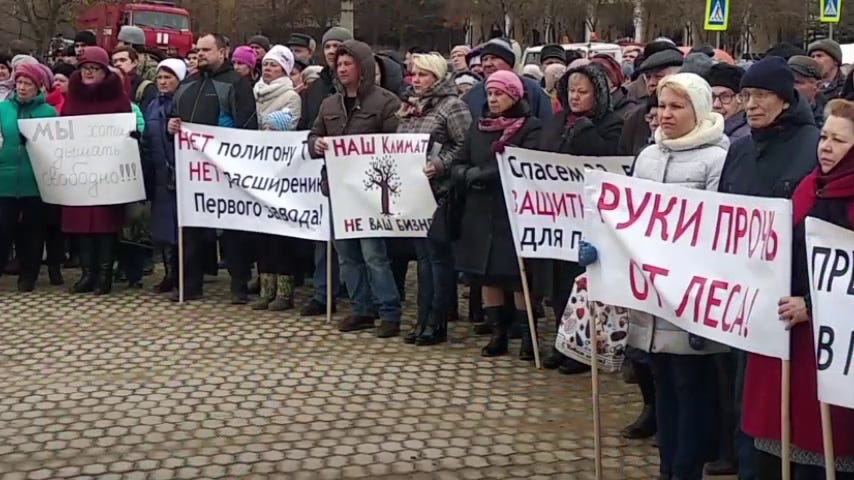
The most common framework for understanding Russian political life in the West is via the optic of authoritarianism, revanchism, and imperial nostalgia. Russians who express support for Putin, or who do not visibly oppose the war on Ukraine are understood to be acting out a collective geopolitical identity: the wounded pride of a post-imperial nation, the resentment of Western humiliation, the backward-looking desire for Soviet greatness. This frontstage Punch and Judy show played out daily on TV misidentifies what drives the bulk of political behaviour and non-behaviour in Russia.
I argue, on the contrary, based on my long-term ethnographic engagement with rustbest company towns, regional cities and rural settlements, that a deeper resentment is about ‘feeling for an absent presence’: a haunting by the possibility of connection and belonging that the Soviet project — contradictory, coercive, and ultimately failed — once nevertheless instantiated. As with all anthropology, I focus on specific times and places, but as far as it’s possible to generalize, Kaluga region, four hours south of Moscow, is not untypical in representing a snapshot of a national feeling for such resentment. This is not nostalgia in the straightforward sense, which tends towards affective sentiment. It is closer to what Raymond Williams meant by a ‘structure of feeling’: a humming tension within experience, a social formation that is not yet fully articulate itself outside the dominant hegemony, but that nonetheless inflects one’s sense of time and place. It is more like the relation of a tree to water than the relation of an ageing person to a cherished photograph. The desire for connection is not chosen or purely personal, but intersubjective and ‘historically’ aware of itself.
The absent presence in question is not the gulag, not the nomenklatura, not the Stalinist terror — though those are also sedimentations. Georgian-Russian philosopher Keti Chukhrov has arguably captured it best: the Soviet model might be called dealienated sociality: the set of actually-existing practices, imperfect and often degraded, through which people were incorporated into something larger than themselves. The factory collective that organized not just production but housing, childcare, holidays, and funerals. The trade union that was also a social club, a welfare office, a venue for the distribution of not just wages but the so-called ‘social wage’: subsidized meals, sanatorium vouchers, kindergarten places, access to better housing. The institution of work itself as a site not merely of economic exploitation but of social recognition and mutual obligation. Caroline Humphrey, writing in the early 2000s about the shock of the transition period, described these (and other organizations) as ‘possessive domains’: spaces in which the self was constituted through collective inclusion, so that to be expelled from them was to lose not just income but a form of personhood. When those institutions collapsed, or were transferred to the market, or decayed into hollow shells, the loss was triply dispossessing. People lost access to work and economic security. They lost the associational life that work had organized. And they lost, in Humphrey’s formulation, an ontological reference point: the sense of being held within a structure of purpose and mutual recognition that exceeded individual reproduction.
Compressing dispossession
The transition from Soviet to post-Soviet was a catastrophic time compression of the dispossession that Western capitalism had accomplished over centuries. The ‘social wage’ — that complex of subsidized goods and services through which the Soviet state had effectively socialized much of the cost of reproducing labour power — was dismantled at speed. Childcare facilities closed or were privatized. Factory social clubs and canteens disappeared. Housing privatization transferred public assets to private hands. Healthcare and education were nominally retained as public goods but were stripped of funding and increasingly captured by informal payments and outright commercial providers. The reproductive burden was, in Silvia Federici’s terms, ‘re-enclosed’: transferred from the collective back to the household, which meant, in practice, back to women who still needed to also hold down a job (if they were lucky), or sell their possessions and yard-grown vegetables on the side of the road.
Zooming forwards to 2022, in the provincial towns of Kaluga region I study, a worker named Igor faces potential mobilization. For merely five weeks from September 2022, the authorities attempted to call-up former servicepersonnel, but this proved so politically risky, that they quickly backtracked in October 2022, announcing the ‘success’ of the policy. Relatively quickly into 2023, recruitment using large monetary payments among the more economically vulnerable parts of the population replaced mobilization of reservists amounting to hundreds of thousands of troops per year.
Igor’s talk always veers into the question of ‘how to get by’. He summarizes the situation with the matter-of-fact bitterness of someone who has calculated the same equation too many times: wages don’t keep up with wartime inflation. In any case, bank rates are too high for a mortgage; a child’s illness sufficient to lose a job; ‘social protection for women is a legal fiction’. These are not exceptional grievances. They are the ordinary texture of Nancy Fraser’s crisis of care in its specifically post-Soviet form. All the costs and risks of precarity are transferred to individuals who must then spin — krutitsia — forever adapting, forever calculating, with no cognitive or emotional bandwidth left over, even when war looms.
What distinguishes the Russian case from, say, the British or even American experience of neoliberal social dispossession is precisely the depth and freshness of that absent presence. In societies where the commons of social reproduction were enclosed centuries ago, their loss has become naturalized, sedimented into common sense. In Russia, the memory is living: it is carried in the bodies and practices of people who themselves used the factory canteen, who themselves were ‘possessed’ by the encompassing domain of the Soviet enterprise. The phantom limb aches because the amputation happened recently enough that the nervous system has not yet adapted. This is what makes the Russia case still valuable for a global left: the trace of the desire for collective social reproduction is still damp, still excavatable. It has not yet fossilized.
Wartime and the Intensification of Contradiction
The invasion of Ukraine in February 2022, and the mobilization that followed in September of that year did not introduce new structural contradictions into Russian social life but merely intensified contradictions that were already operative. The most immediate structural effect was demographic. The combination of mobilization, emigration (roughly a million people, predominantly educated and economically active, left Russia in 2022 alone, though many have since returned), and the ongoing secular decline in the working-age population produced an acute labour shortage in precisely the sectors where the pre-war economy had already been strained. These included transport and logistics, and later the service industries and municipal workers. Shortages also crept into the industrial sectors, as skilled workers who could move were ‘stolen’ by the military industrial complex which could offer higher wages. At least before 2026, the result was something that workers with any structural bargaining power could begin, cautiously, to exploit. Wages in some sectors rose significantly in some industrial locations and in big cities. The social bargaining power of labour, in purely structural terms, strengthened. Workers can and do vote with their feet in ways that were less available to them before.
And yet this apparent structural strengthening takes place within a social and political context that prevents its translation into associational power. The organized labour movement in Russia has been co-opted for decades. The concept of ‘illusory corporatism’ that David Ost applied to the post-communist transitions of Central and Eastern Europe describes the Russian case aptly: unionism is institutional theatre, absent as genuine representation. There’s a post-communist labour paradox — strong structural position, weak associational capacity and in the Russian war this paradox only intensifies.
The implications for social reproduction tend to be passed over. The inability of workers to convert structural into associational strength is not merely a product of state repression, though it is certainly that. It is also a product of the way social reproduction is organized — or rather, disorganized. A workforce that must devote enormous energy to the hustle of survival, to navigating the informal economy of childcare and healthcare and housing, is a workforce with diminished capacity for collective organization. Silvia Federici’s insight about the political function of primitive accumulation applies here: the fragmentation of reproductive life into individual household struggles is not just an economic consequence of neoliberalism but a political one. Exhausted, isolated, without the time or space to develop solidarity beyond the household, workers can rarely mobilize even when their structural position objectively warrants it.
Simultaneously, the wartime state extends significant financial incentives to those willing to fight — contracts worth hundreds of thousands of rubles, payments to families of the fallen — while simultaneously cutting social expenditure in healthcare and education. The offer is explicit: the state cares (in mercenary terms) for those willing to die; for those who are not, the market remains. This double movement — expanding the monetary incentive for death, contracting the social infrastructure for life — is the care crisis in its most cynical wartime form. This creates a perverse moral economy in which those soldiers unlucky enough not to die-for-hire are constructed as unworthy of care, which produces its own social friction: businesses refuse to hire returning fighters; demobilized soldiers face social sanctions from below even as they are lionized from above. While programmes exist to try to support veterans and also integrate them into the workforce there are two barriers. Firstly, the demographic profile of men willing to sign up for the war often aligns with those who didn’t want to or couldn’t hold down formal employment, or matched the profile of regions that were economically depressed. Secondly, the stigma is significant: employers suspect soldiers of having unmanageable mental health disorders and substance abuse as a result of service; they ‘typologize’ them sociologically as unreliable for ‘normal’ work; they doubt, given their previously high pay (perhaps triple or quadruple normal blue-collar pay) that these workers will remain long in their jobs; they deduce that these workers will lack necessary skills, given they took the ‘extreme’ decision in the first place to go to fight rather than pursue a civilian career.
The Corporate Family: Fictive Kinship as Social Reproduction
In my work I try to tie this together to describe a constellation of social forces — the absent presence of collective personhood, the intensification of the care crisis, the structural strength of labour — but under wartimes, I am interested in the emergence of a social phenomenon that deserves serious analytical attention: ‘devolved corporatism’ articulated through the idiom of fictive kinship at the level of employment relationships.
Fictive kinship in anthropology refers to the recognition that social bonds of obligation, solidarity, and mutual recognition exceed the biological relation. In corporate contexts, this is generally treated as a management ideology: the firm as family is a well-documented feature of Japanese corporate culture, of certain forms of American evangelical capitalism, and of what Luc Boltanski and Eve Chiapello called the ‘connexionist’ spirit of contemporary capitalism, in which belonging to a team substitutes for the lost securities of Fordist employment. But the Russian case suggests something more than ideological manipulation from above, or at least something more complicated.
Caroline Humphrey’s 1970s (and later) ethnography on Soviet collective farms identified the ‘collective’ as a specific Soviet institutional form whose genius — if it can be called that — was to organize not just production but the entire social existence of its members. The collective was not merely an employer; it was a ‘domain’ in her terms, a zone of encompassing social incorporation within which the self was constituted. People were, in a precise sense, possessed by their collective: their identity, their social recognition, their access to social goods, their sense of purpose and belonging were all organized through and by the collective’s incorporation of them. The loss of this — ‘double dispossession’ — was therefore not just a material loss but an ontological one.
What is now visible in the provincial factories and metalworking plants of post-2022 Russia is, I argue, an attempt to reconstruct something functionally analogous — not by the state but by individual firms, not through the mechanisms of Soviet paternalism but through an uneasy combination of Soviet idiom and neoliberal discipline. My good friend Nikita, always lounging with me at home in his blue overalls, or sitting over a barbeque in his jerrybuilt garage, is employed in a metal fastenings firm in Kaluga’s Special Economic Zone. When I see him again in 2023 he’s ‘proud’ to announce that he no longer fears being called because he is protected by his employer from mobilization — a ‘reserved’ category worker whose draft deferral depends on maintaining his employment. In return, he performs a new kind of corporate loyalty: he stays late, works hard, and participates in the firm’s social media culture of team videos and collective self-presentation. The exchange is transactional, but it is also inflected by a historical trace of feeling. Nikita and workers like him develop what appears to be genuine affective attachment to the firm: incorporation into a ‘corporate extended family’. An HR manager expresses surprise at its success to me, even embarrassment; he had not predicted that workers would take the family metaphor so seriously.
Incorporation draws heavily on the Soviet vocabulary and idioms of paternalism. The general director of a new (wartime) ventilation plant in Kaluga describes himself as responsible for social ‘infrastructure’ in terms that echo the Soviet enterprise director as patron. Workers come to him as ‘supplicants’ — the word is precise and important — for social projects, sporting sponsorships, the maintenance of urban life that the state no longer provides. Boris, a skilled technician at this firm who also escapes mobilization describes this employer as a khoziain — a word that Xenia Cherkaev recently wrote about in her book on Soviet property forms. This is a term for a master of a domain whose authority is at once despotic, contingent, paternalist, and collective. Boris, who was born in 1990, compares his boss (admiringly) to Elon Musk, but the word he uses is very Soviet, in the way it is used today.
Scepticism and the Limits of Incorporation
It would be a mistake to read this emergent fictive kinship as simply ideological domination — as false consciousness that prevents workers from seeing their true interests. The third figure in this analysis is wiley Misha. Misha is a technician in the energy sector that should, by wartime logic, be thriving. But his enterprise suffers from labour shortages. As a result, his boss must accommodate his demands for flexible hours because the risk of losing him is real. Misha monitors job boards, calculates carefully, distinguishes between headline wages and the ‘hidden conditions’. He has left better-paying jobs because the greater self-exploitation they required was not worth it. He is a ‘realist sceptic’: someone who reads the offer of corporate paternalism clearly, who neither rejects it romantically nor accepts it uncritically, but calibrates it while building a kind of historical materialist DIY history of capitalism in Russia since 1991.
He knows, from lived experience, that wages in Russia have nominal and discretionary and ‘personal’ components, that what is offered and what is delivered are not the same thing, that the ‘norm’ gets quietly doubled while the pay increases by a fraction of the work increase, that working harder beyond a threshold is dangerous. His parting comment — that he might go to work for a Chinese automotive firm ‘but only if the conditions are right: a normal five-two schedule, plus lunch, and the proper corporate trinkets befitting the scale of production’ — is a precise, knowing articulation of the labour compact he is willing to enter and the terms on which he is willing to enter it.
This sceptical realism is, in E. P. Thompson’s terms, a form of moral economy: an operative understanding of what is fair and what is not, what obligations employers owe to workers, what the minimum terms of dignified employment consist in. It draws on the Soviet legacy not as nostalgia but as a set of standards — imperfectly realized, often betrayed, but remembered — against which present conditions are assessed and found wanting. The vernacular socialism that others have traced in Russian working-class culture is not gone; it is simply subterranean, surfacing in the calibrations of people like Misha rather than in explicit political contestation.
The labour paradox that structures Russian workers’ lives — structural strength, associational weakness — is therefore not simply a product of fear or false consciousness. It is a product of the specific configuration of social reproduction under wartime neoliberalism: the absence of the collective forms that would allow structural power to be converted into organized action; the exhaustion of reproductive labour that consumes the time and energy that organization requires; the genuine, not manufactured, need for protection that the firm’s paternalism partially addresses; and the accurate, not ideologically distorted, assessment that the available forms of collective action are likely to be crushed before they can succeed. Nonetheless, a valid question is to doubt that Russia is significantly different from other places - equally repressive - where collective forms of resistance did occur. What is less clear is how new forms of protest and political action based on the real and increasing grievances the war has caused will start and what political entrepreneurs will ‘ride’ their wave.
Absent Presence as Political Resource
There is a strand in social reproduction theory, visible in Federici’s work on commons and commoning and in Fraser’s concept of non-market forms of social cooperation, that insists the reproduction of life under capitalism always exceeds and partially escapes the commodity form. People feed each other, care for each other, maintain networks of mutual aid that are not fully captured by either market exchange or state provision. These practices are not merely survival strategies. They are the seeds of a different social logic, traces of a commons that is always being both enclosed and reconstituted.
The absent presence of Soviet collective sociality in Russia is something like this: a trace, a remaining sediment, of a different way of organizing social reproduction that capital has not fully succeeded in expunging. It manifests in middle-aged man’s spontaneous decision to cut firewood for an elderly neighbour in my village and sit on her bench for an hour in conversation – even though he doesn’t really want to; in my neighbour Tamara’s cherishing of a broken Soviet vacuum flask her mother used to take to work, and her articulation of a sensibility of ‘social justice and responsibility’ that she identifies as an unthought inheritance from the Soviet education system. The significance of this trace is not nostalgic but prospective: it is evidence that the desire for collective social reproduction is not extinguished, only displaced. Many of the practices I observe also find their origin in a tradition of mutual aid, which is socialist, if not necessarily Soviet.
The politics of this situation is not simple or comfortable. The devolved corporatism of the post-2022 Russian enterprise is not an embryo of socialist self-organization. It is a form of social incorporation that, as Gramsci would have recognized, generates consent to existing relations of production by partially addressing the social needs that those relations create. Hegemony is still born in the factory. The worker who is protected from mobilization by his employer, who participates in team-building videos, who feels the firm as a second family, is not simply duped; he is incorporated. His consent is won through real concessions, however limited and conditional, that address real needs that the state and market have otherwise left unmet.
But incorporation is not permanent, and its contradictions are visible. The firm’s care is contingent and revocable; the boss’s paternalism is power distance dressed as warmth; the protection from mobilization lasts only as long as the firm needs it and the state permits it. The structural power of labour that the demographic crisis has created does not disappear simply because workers feel familial loyalty to their employers. As the war eats into the leftovers – human, infrastructural, otherwise material – it becomes more and more likely that structural power of ordinary working Russians will be activated, at first in supplications to the boss, then to the regional government, and then to ‘the good Tsar’. But even now people are beginning to realise the biggest khozain in the country has no ear, and no reverse gear.
In the meantime, in a slightly different modality of thinking among the people whose lives I inhabit, the absent presence makes itself felt: the phantom limb’s ache: renewing the life of the village, the town, the country, was once more than the individual hustle; the factory was once more than a labour market; the state was a mobilizer and frankly a monstrous thing, but it also encompassed all for what seemed like a future commonwealth. That knowledge is a resource. It is not yet fully visible as ‘political’. But it is not nothing.
Jeremy Morris is Global Studies Professor at Aarhus University, Denmark. His book on wartime social reproduction in Russia Everyday Politics in Russia: From Resentment to Resistance was published by Bloomsbury in 2025.
