


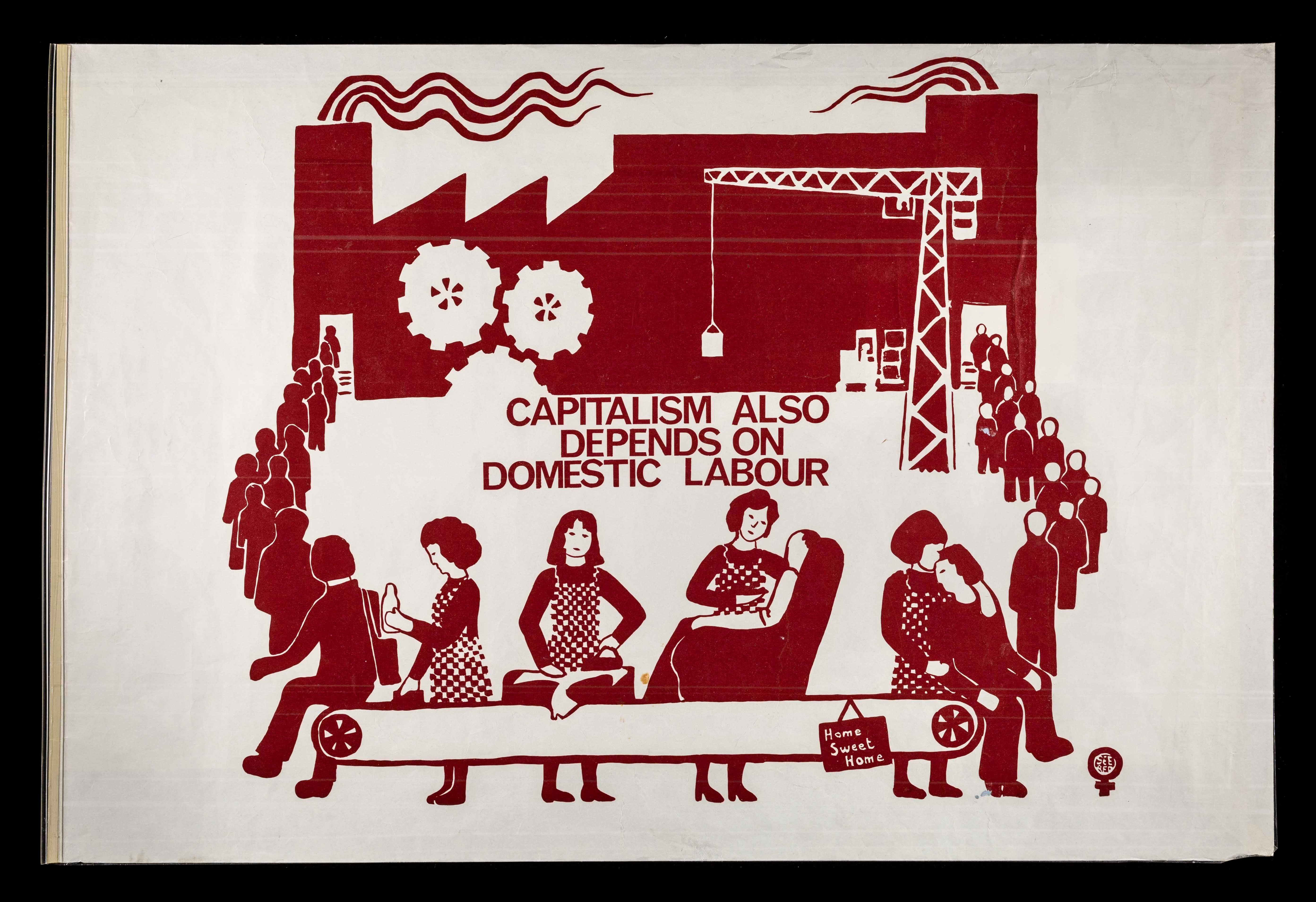
Editorial note: This article is part of Red Feminisms, an ongoing series that aims to recover for theoretical debate, historically grounded contemporary analysis, and militant struggle progressive socialist legacies that sought to restructure the mutually constitutive and historically gendered relationship between productive and reproductive labor, advancing visions for the joint liberation from class, patriarchal, and racial oppression.
In Marxism and the Oppression of Women: Toward a Unitary Theory (1983), US feminist theorist Lise Vogel argued that Anglo-American feminist discussions about women’s domestic labor detached the feminist theory of the family from the Marxist theory of capitalist society. After the second edition of the book in 2013, Vogel’s reflections on the limitations of prior feminist theoretical framework, and in particular her capacious category of social reproduction which sought to reinscribe the idea of the family into the overall movement of capitalist economic history, have inspired an updated effort toward integrating the separated feminist critiques of the family and the Marxist critique of capitalism: social reproduction theory.[1]
In a new collection of previously published essays, The Contested Domain: Selected Writings on Marxism and Feminism (2025), edited by Kirstin Munro and included in Tithi Bhattacharya and Susan Ferguson’s “Mapping Social Reproduction Theory” series in Pluto Press, Vogel emerges as a very committed author. The collection, which unites half a century of her scholarship, strikes with her life-long devotion to the project of developing a simultaneously feminist and Marxist theorizing of the capitalist system. Beginning her feminist work as a participant in the 1960s civil rights movement and becoming an activist in the women’s liberation movement in the 1970s, Vogel, throughout her life, never ceased to seek a combined Marxist-feminist account of capitalism.
The articles and essays assembled into a single volume represent some of the central questions of the 1970s women’s liberation movement. Reading these essays alongside each other allows one to imagine a rare historical moment of public and open questioning in which novel conceptual problems arise as easily as heated polemics around them. What is “the woman”? What is the cause of women’s oppression: patriarchy, capitalism, or both (and, if the latter, in what way are they combined)? And what is the status of invisible domestic women’s labor in capitalism? These are a handful of the most debated dilemmas that led to major disagreements in scholarship and activism during the 1970s.
Refreshingly, Vogel insists that such dominant questions of the era are insufficient to understand capitalist society. Nearly all essays in this collection, from “The Earthly Family” to “Marxism and Feminism: Unhappy Marriage, Trial Separation or Something Else?” argue that one category fundamental to modern patriarchal capitalism has yet to be the subject of rigorous critical research: the category of “the family.” Vogel’s project of formulating the critical definition of the family appears to be a lonesome and intellectually isolated struggle in the new collection. Nevertheless, her search follows a longer history of Marxist feminist discussions in Germany, Russia, and the Soviet Union, and especially Clara Zetkin, Vladimir Lenin, and Aleksandra Kollontai, in taking seriously the question of what the family means.
Feminism, Marxism, and the family question
From its roots in 19th-century socialist and Marxist philosophy, feminist theory has been preoccupied with addressing the so-called “woman question.” However, as Vogel notes, “the notion has never been obvious. Ordinarily, the term acts as a rubric covering an assortment of important problems: women’s oppression in general, the family, equal rights for women, women’s differential participation in social labor and in other aspects of social life, relations between the sexes, personal and nonwork relations of all sorts.”[2]
In other words, she observes that feminist theoretical discourse has been historically split into a few relatively independent conversations: first, a conversation on the meaning of the category “woman”;second, on the idea of the family; third, on women’s role in public political life; and, finally, on women’s participation in the labor market. Vogel continues, “initial efforts to develop a socialist-feminist theoretical perspective focused on the family unit and the labor of housework and childrearing in contemporary capitalist societies,”[3] but later, second-wave feminist discussion deemphasized the initial family question and “a new emphasis on the separate sphere of domesticity swept through the field of women’s history in the later 1970s.”[4] Second-wave feminist literature assumed without questioning the 1950s–60s liberal sociological notion of the family as a distinct sphere abstracted from production and economy.[5] In Millet’s and Firestone’s feminist histories, for example, one found the commonplace and unquestioned view of the family as an isolated and enclosed area of life.[6] For Vogel, the novel mainstream feminist family conception sharply diverged from the historic socialist-feminist position on what the family was.
The accepted and naturalized association of the family with the separated domestic and private space in emerging socialist-feminist language was supported, for instance, by Juliet Mitchell’s 1966 pamphlet “Women: The Longest Revolution,” Kate Millet’s Sexual Politics (1970), and Shulamith Firestone’s Dialectic of Sex (1970). It also featured in Michele Barrett and Mary McIntosh’s The Anti-social Family (1982). Such a theory of the family “validated women’s lives and gave women agency but it simultaneously shifted scholarly focus away from structural questions of social organization and power.”[7] Vogel argues that the post-war wave of socialist-feminist theories abandoned Marx and Engels’ project of analyzing the family as an essential part of the nineteenth-century capitalist politico-economic development.
To overcome the dominant two-sphere framework, theorists of domestic labor like Mariarosa Dalla Costa, Margaret Benston, and Peggy Morton identified the family as “a unit whose function is the maintenance and reproduction of labor power”[8] for the capitalist market. Although their approach allowed Marxist feminist theory to formally link the inner life of the family to the outside process of capitalist industrial production, their definition of the family also sharpened the ideological distinction between the two spheres of home and workplace, the family and economics. Domestic labor theorists shared one underlying historic-theoretical thesis, namely, that the family was primarily located within the sphere of unpaid and invisible domestic labor and that it became economically separated from the formal labor market with the rise of the capitalist mode of production and wage labor.[9]
In what I consider the most important article from the collection, titled “The Contested Domain: A Note on the Family in the Transition to Capitalism,” Vogel ultimately proposes that Marxist feminist theorists revisit the family as a major but dismissed theoretical problem. She suggests substituting the limited understanding of the family as the private domestic sphere with one more accurate to capitalist reality, namely Marxist-feminist study of the family as “the process Marx called individual consumption.”[10]
Compared to other Marxist feminist theorists of domestic labor from Dalla Costa to Benston, Vogel’s distinctive point is that the family household, strictly speaking, was never materially separated from the functioning of capitalist economy. Despite being sometimes experienced as the private, domestic labor, and housing space in modern countries, the family household has been in fact a daily vehicle of consumption. Under the capitalist economic system, families have become crucial individual consumers of all societally produced goods and services from stores, companies, and restaurants, including food, clothes, housing, education, transportation, etc. Therefore, along with unpaid domestic labor, individual family households have been directly implicated in both the transition to and sustaining the capitalist market-based system of producing and distributing goods. In Vogel’s own terms, families have been immediately imbricated into the social reproduction of capitalism rather than having existed at the margins of that economic system.
It should be noted that Vogel’s impulse remains mostly critical throughout this and other essays,[11] as she continues calling to move past the misleading Marxist feminist account of the family as the enclosed domestic terrain. She persists: “The family and the working-class family are unusually powerful ideological notions, both included within the tradition of discussion on the woman question. Because of their serious analytical consequences and psychological overtones, they require a thorough-going critique, leading to the establishment of scientific concepts.”[12]
The difficulty with deconstructing the category of the family today is that as the key ideological category in our society it subsumes multiple phenomena distinctive of the current family-based politico-economic organization. First, there is a modern legal institution of monogamous marriage known as the nuclear family. Family in the first sense of the marriage institution refers to the relationships between a husband and wife, as well as between parents and children. As Eli Zaretsky characterized this family definition, it presupposes the family being the realm of personal life.[13] As such, the family conception often signifies the rules and inner psychosocial dynamics of a married couple. Second, following Engels, feminist theorists have been critically looking at the family inside the boundaries of a dwelling. In the Engelsian sense, the family conception has shifted to emphasize the invisible and underrecognized cleaning, cooking, and childcare labor done within the home and the institution of private housing property itself in Marxist feminist thinking.
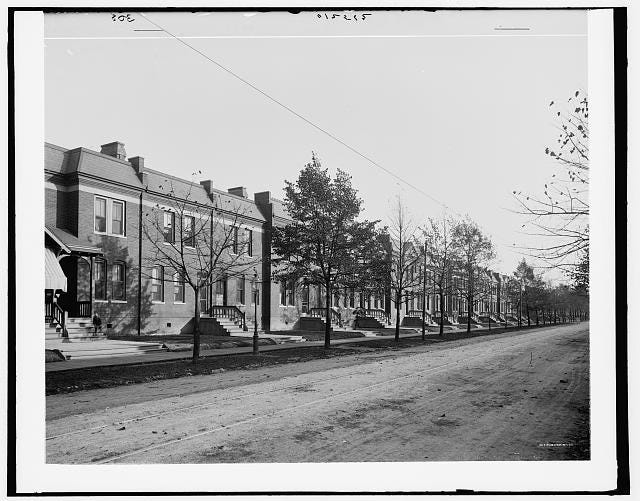
However, the family category suggests larger phenomena than these. The term family also habitually reflects the hegemonic mode of organizing people’s dining, childcare, accommodation, as much as transportation and leisure in capitalist countries. That is why people tend to associate with the word family the material reality of their daily economic life such as shopping for food, furniture, and clothes, ordering deliveries from stores and restaurants, managing the household budget, finding a childcare center, renting and buying housing, driving and paying for a car, planning for a vacation, etc. One can easily continue the long list of the family’s normalized economic activities. In such a third and most systemic sense of the household, the family category in ordinary language is indicative of something as broad as the status quo framework of the society’s economics. This view on the family can be traced back not only to Marx himself but to Adam Smith, John Stuart Mill, or John Keynes, as it corresponds to the nineteenth century classical political economy’s definition of the family.
Vogel asks Marxist-feminist theorists to move past the first two definitions of the family as the separated personal sphere that became influential during the 1970s, and to formulate the classical and Marxist politico-economic understanding of the family in the systemic sense of household. Kirstin Munro recently returned to Vogel’s proposition, arguing too that the family household represents a sector of capitalist society alongside firms and states.[14]
What is the family?
Marx believed that the division between family, economics, and politics was distinctive of modern capitalist society and was a product of its political ideology: liberalism. Although many liberal philosophers claimed family to be a natural and private entity, it was a modern historical politico-economic construction. Marx considered this to be his task to subject the naturalized lines between family, economics, and politics to a historic and, hence, scientific critique.[15] Of course, he never developed that kind of critique of the family’s abstraction from economics himself. It was first Engels who attempted to trace the politico-economic genesis of the family in Origin of the Family, Private Property, and the State. It might appear to some that family was a natural human institution, he wrote there, but the ruling bourgeois class gave rise to what we understand by the family in order to ensure class and wealth reproduction through private property laws.[16]
Vogel is right to pinpoint the problematic pattern in both their comments around the family issue: “Marx and Engels used the concept of property to tie the bourgeois family to the operation of the capitalist mode of production… But they never developed an equally clear grasp of the working-class family as an element of the processes of social reproduction in capitalist society.”[17] What she notices in their writings is that they too tend to spatially and materially differentiate the family from capitalist society, often looking at it only as an independent domestic entity, or, as Engels liked to say, a small nucleus of society.[18]
Despite their ambiguous and succinct formulations, Marx and Engels both commented that, within capitalism, the family transformed from being an elementary and self-sufficient basic social unit under feudalism into an individual consumption agency dependent on large-scale socialized industries. Purchasing goods and services with worker’s wages, the individual family household was becoming part and parcel of the capitalist mode of production. Ultimately, Vogel strives to recover that broader systemic and social view of the family household, and its role in capitalism’s reproduction. Following Marx, she seeks to point out that the family actively participates in the capitalist economy: it consumes socially produced goods and services by spending money earned from waged work and, in most cases, includes women and men directly employed in industries. Its real economic role is therefore far more substantial than a provider of unpaid cooking, cleaning, and childcare labor.
Unsure whether the family should be defined in terms of a sphere at all, Vogel appears more certain that it does not function as the smallest molecule of society. Rather, the opposite is true: what people refer to as the family nowadays implies nothing short of the social reproductive process: “the entire process of the reproduction of the social conditions of production, comprising processes of exchange and consumption as well as of immediate production.”[19] She therefore expands the category of the family to capitalism’s social reproduction process taken as the whole, from the processes of production to those of distribution.
Her point about the family category being suggestive of the entire capitalist economic process represents Vogel’s most insightful, original, and provocative thesis. However, because her analysis relies on close readings of other contemporaneous feminist theorists, her original critical point about the family gets lost within the 1970s Marxist feminist debates and conflicts. As she herself acknowledges, Vogel falls short on her task of building a theory of the family upon her critique and observations.
One problem with Vogel’s theorizing stems from her attempt to replace the narrower feminist conception of the family entirely with Marx’s broader and more capacious concept of social reproduction. Vogel states that under capitalism, there is “a steady movement toward the socialization of the functions of the family.”[20] Consequently, “the family is quietly undergoing a steady process of dissolution.”[21] As the family’s productive and reproductive functions have shifted from self-sustaining households to industries or society by and large, she contends that the study of the family in contemporary society should give way to the broader study of social reproduction.
Although Vogel’s alternative notion of social reproduction, Marx’s all-encompassing and universal category, highlights the diminishing role of family households in production, it does not adequately explain the family’s place within contemporary capitalism. Time and again, Vogel sets aside the important and specific theoretical question of what the family actually means and how it functions in society.
The other significant limitation of Vogel’s discussion stems from her selective engagement with Marx, and to a lesser extent, Lenin as the principal sources for an alternative theory. The difficulty is that neither Marx nor Lenin developed an extensive discussion of the family. Each of the authors left only a few brief and occasional remarks on the topic. Had she incorporated the work of other early twentieth-century socialist thinkers, such as, for example, Aleksandra Kollontai into the conversation, her theory would have gained a crucial historical and intellectual foundation.
Kollontai too proposes a social understanding of the family that resembles the one toward which Vogel gestures in the aftermath of the 1970s. Thus, anticipating the arguments later advanced in The Contested Domain, Kollontai argued in the Social Basis of the Woman Question (1909) that industrial capitalism weakened, rather than strengthened, the material separation of family from society, a view she developed in direct opposition to liberal feminists. [22] She stated that the new family economy had transcended the boundaries of the former feudal household through the rapid development of capitalism and industrialization in Germany, France, and even in the Russian Empire.
In agreement with Zetkin and Lenin, she enthusiastically supported the general capitalist tendency toward the socialization of the family as part of the ongoing socialization of all individual and feudal forms of production. For example, in Communism and Family (1920), an overview of her social account of the family, Kollontai suggested that “the family economy is gradually being deprived of all the domestic work without which our grandmothers could hardly have imagined a family. What was formerly produced in the family is now produced by the collective labor of working men and women in the factories.”[23]
The similarity between Vogel’s and Kollontai’s reflections on the family question is evident. But Kollontai goes further than Vogel in expanding the conception of the family to encompass both domestic labor and industrial factory work. According to Kollontai’s earlier observations, the boundary between the family and the factory does not disappear entirely with industrialization. Instead, she emphasizes how the idea of the family evolves to signify the naturalized system of the double burden, that is, the societal expectation that working women devote themselves to both factory labor and performance of non-productive, non-industrialized individualized domestic tasks, including shopping, cooking, cleaning, and caring for children and other relatives at home.
Kollontai lays the foundations for a new theoretical approach to understanding the family by describing it as “the framework of the modern system.”[24] As Kollontai, Krupskaya, Lenin, and Armand all observed in Russia, the family-based economic framework dissipates people’s, and particularly women’s, time and energy. The system of individual household management generates chronic overwork as well as physical and mental exhaustion. Beyond exhausting people, individualized cooking and living also waste society’s natural resources.
To illustrate their shared point, Lenin offers an example of the Russian peasant household in The Development of Capitalism in Russia. The Process of the Formation of a Home Market for Large-Scale Industry.[25] There, he recalls how in a typical peasant household comprised of several dozen members, a woman often cooks meals only for her own husband and child, washes only her own dishes, and cleans only her corner of the shared house. Following this old historical tradition, urban working women prepare food for only one or two people within their immediate nuclear family, even when hundreds of workers live together in dormitories. This wasteful process of individual shopping and food preparation, Lenin suggests, not only imposes a systemic overburden on women but it is far more expensive and less efficient way of cooking than large-scale collective meal preparation in factory canteens and schools.
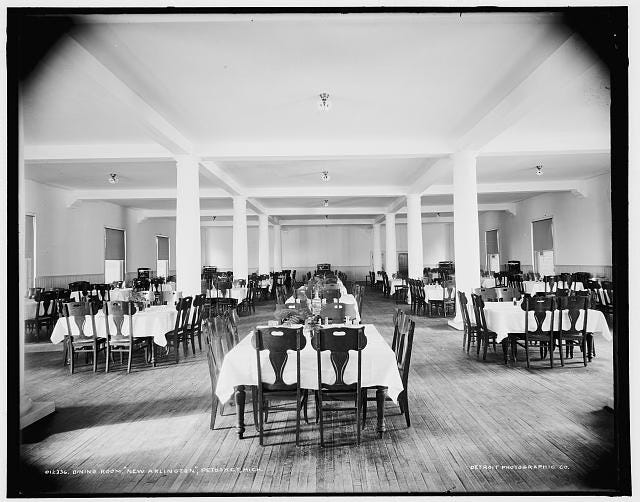
Although capitalist industrial development did not invent the patriarchal nuclear family, it normalized individual family living and fostered the emergence of the family-based society. Capitalism created a home-market for the large-scale industries of manufacturing and construction. The growth of these industries rested, in part, on promoting the bourgeois belief among workers that the most natural way of living was in a single-family home rather than in shared communal housing; that the most natural of preparing food was to cook for one’s family. Meanwhile, the cost of living for workers continued to rise, as each working-class family was encouraged to purchase its own appliances, furniture, electronics, food, etc.
Vogel writes very favorably about these comments by Lenin, praising his formulation of the family question for exhibiting “a clarity not previously achieved.”[26] At the same time, she limits the twentieth-century Marxist debate on what the family means under capitalism to his observations.[27]But Vogel’s own work and arguments become much easier to follow once they are situated within a larger, older, and long-standing Marxist feminist family debate represented by not only Lenin, but by Kollontai, Krupskaya, Armand, and others. Far from contributing to the domestic labor debates, Vogel’s essays in The Contested Domain, I would argue, are better understood as a more recent reiteration of a different “family debate” which occupied a prominent place in Marxist discussions in late nineteenth-century Germany, Russia, and later in the Soviet Union.
Conclusion
Vogel’s analysis suggests that the concept of the family cannot be abstracted from the capitalist economic process. One interpretation of her somewhat elusive thesis about the family’s inseparability from capitalism is offered by Susan Ferguson and David McNally in their preface to Marxism and the Oppression of Women. As they argue, Vogel seeks to identify “the working-class family as the social site for the production/reproduction of the special commodity, labor-power.”[28] She therefore understands the family, and the domestic reproductive labor performed within it, as essential labor to the overall functioning of capitalism. While she does make this claim in her essays, it is one that Vogel shares with many other Marxist feminist theorists of the family and domestic labor.
What distinguishes Vogel’s thinking about the family from that of her contemporaries is her insistence on the fact that, beyond supplying unpaid domestic and socially reproductive labor, families under capitalism have become the ultimate consumers in many core markets, including those for housing, groceries, and automobiles, as well as education, childcare, and healthcare. In this respect, her broad, bird’s-eye view of the family moves closer to early Soviet feminist thought than to the Marxist feminist debates of the 1970s. For Kollontai and Lenin, as well as for Vogel, to say that the family is central to capitalism is to emphasize that the individualized family household presents the material infrastructure of consumption in capitalist society. In other words, the family is not merely a precondition of capitalism but one of its fundamental conditions.
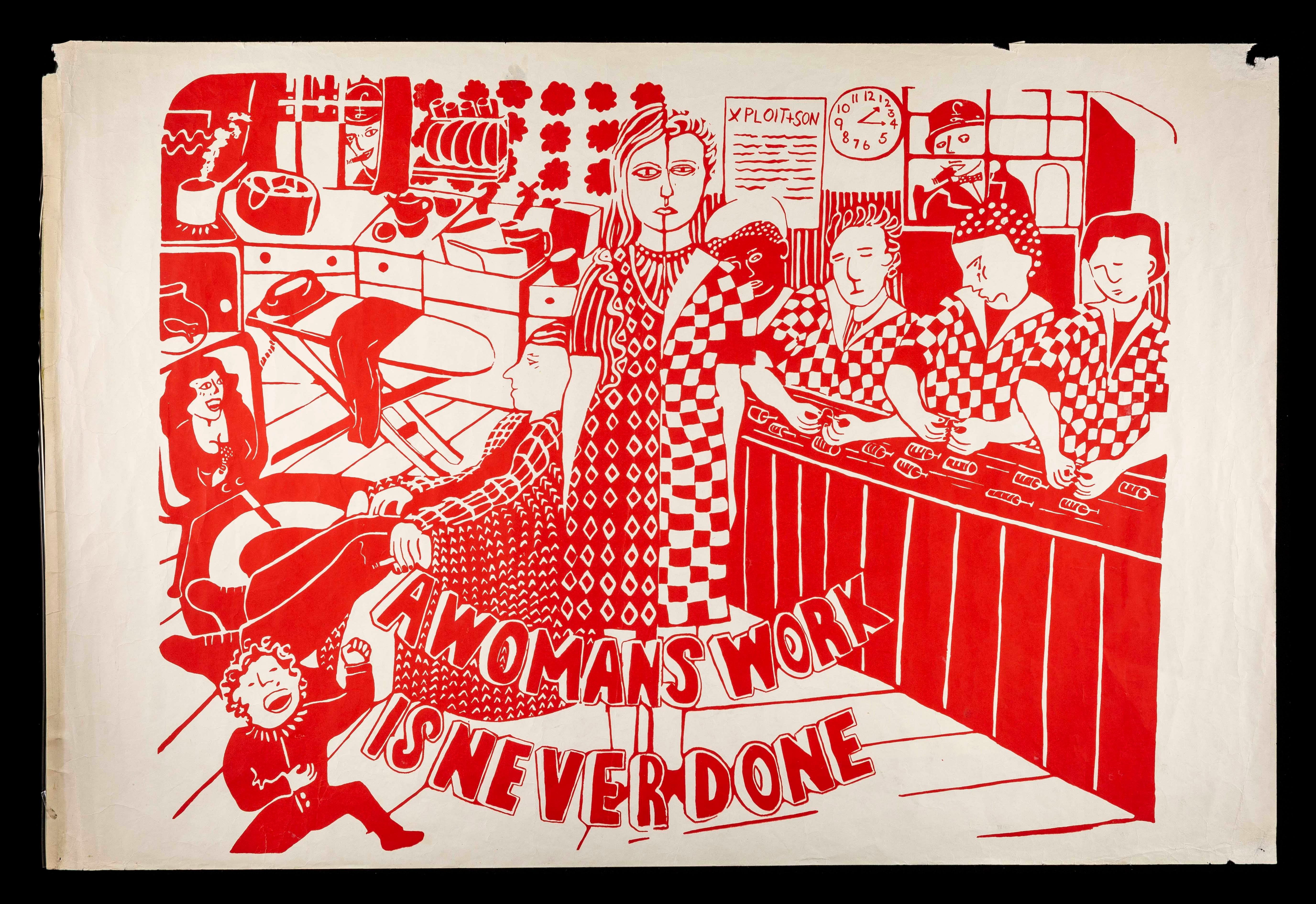
There has been a recent resurgence of interest in the question of housework, a conversation that had remained rather stalled since the 1970s. While new debates on unpaid and paid social reproductive labor are flourishing, the question of the family in capitalism has not yet received enough attention from the updated Marxist feminist scholarship. That is why it is the major achievement of The Contested Domain that the collection centers on the discounted family problem. Despite Vogel’s persuasive criticisms, we still lack a good grasp of what the family means for the capitalist system. In addition to the influential 1970s framework, some seeds for a more systemic account of the family can be located in the more distant Soviet feminist past. The challenge for those who share Vogel’s critique, then, is to take up the conversation about the family where she and Kollontai leave off and to commit the life-defining task: developing a comprehensive Marxist feminist understanding of the family.
Anastasia Kalk is a feminist and political theorist with a particular interest in the relationships between democracy and socialism. She is a Visiting Scholar at NYU's Jordan Center for the Advanced Study of Russia and CUNY's Center for Place, Culture, and Politics.
[1] Tithi Bhattacharya (ed.), Social Reproduction Theory (Pluto Press, 2016); Susan Ferguson, Women and Work:Feminism, Labour and Social Reproduction (Pluto Press, 2020); Aaron Jaffe, Socialist Reproduction Theory and the Socialist Horizon (Pluto Press, 2021); Alan Sears, Eros and Alienation: Capitalism and the Making of Gendered Sexualities (Pluto Press, 2025).
[2] Lise Vogel, “Questions on the Woman Question,” in The Contested Domain: Selected Writings on Marxism and Feminism (Pluto Press, 2025), 89.
[3] Vogel, “Marxism and Feminism: Unhappy Marriage, Trial Separation or Something Else?,” in The Contested Domain, 109.
[4] Vogel, “Telling Tales: Historians of Our Own Lives,” in The Contested Domain, 172.
[5] This standard sociological account can be traced back to Auguste Comte, Talcott Parsons, or, as Juliet Mitchell quotes it, the 1964 American anthology The Family and the Sexual Revolution. Juliet Mitchell, “Women: The Longest Revolution,” New Left Review, no. 40 (November–December 1966). Along similar lines as Vogel, Eli Zaretsky has proposed a critique of this account in Capitalism, The Family, and Personal Life (Harper & Row Publishers 1976).
[6] Kate Millett, Sexual Politics (New York: Doubleday, 1970); Shulamith Firestone, The Dialectic of Sex: The Case for Feminist Revolution (New York: Morrow, 1970).
[7] Vogel, “Telling Tales: Historians of Our Own Lives,” in The Contested Domain, 173.
[8] Peggy Morton, “A Woman’s Work is Never Done,” in From Feminism to Liberation, ed. Edith Altbach (Cambridge, MA: Schenkman Publishing, 1971), 214.
[9] See, for example, how Mariarosa Dalla Costa narrates the history of capitalism in “Women and the Subversion of a Community”: “In precapitalist patriarchal society, the home and the family were central to agricultural artisanal production. With the advent of capitalism, the socialization of production was organized with the factory at its center…Women, children, and the aged lost the relative power that derived from the family’s dependence on their labor, which was seen to be social and necessary. Capital, destroying the family, the community, and production as a whole, on the one hand, has concentrated basic social production in the factory and the office and, on the other, has in essence detached the man from the family,” in A Mariarosa Dalla Costa Reader, ed. Camile Barbagallo (PM Press, 2019), 20.
[10] Vogel, “Class and Other Roots,” in The Contested Domain, 70, 71.
[11] She admits it herself that she could only “gesture in the direction of a more adequate approach.” In Vogel, “Class and Other Roots,” 71.
[12] Vogel, “Questions on the Woman Question,” in The Contested Domain, 94.
[13] Eli Zaretsky, Capitalism, the Family, and Personal Life (Harper & Row Publishers, 1986).
[14] Kirstin Munro, “‘Social Reproduction Theory,’ Social Reproduction, and Household Production,” Science & Society83, no. 4 (October 2019): 456.
[15] Karl Marx, The German Ideology, chap. 1 “Feuerbach,” in Marx. Early Political Writings, eds. Joseph O’Malley and Richard A. Davis (Cambridge University Press, 1994), 174.
[16] Friedrich Engels, The Origin of the Family, Private Property, and the State (Verso, 2021), 80.
[17] Vogel, “Questions on the Woman Question,” 92.
[18] Vogel, “Engels’ Origin: Legacy, Burden and Vision,” in The Contested Domain, 150.
[19] Vogel, “Questions on the Woman Question,” in The Contested Domain, 100.
[20] Vogel, “The Earthly Family,” in The Contested Domain, 42.
[21] Vogel, “The Earthly Family,” in The Contested Domain, 42.
[22] Alexandra Kollontai, “Brak i Semeinaya Problema” [Marriage and the Family Problem]. In Sozial’nie OsnoviZhenskogo Voprosa [The Social Basis of the Woman Question] (Saint Petersburg: Znanie, 1909), 117-120.
[23] Alexandra Kollontai “Communism and the Family,” in Selected Writings of Alexandra Kollontai (Allison & Busby, 1977), https://www.marxists.org/archive/kollonta/1920/communism-family.htm
[24] Alexandra Kollontai, “Introduction to the Social Basis of the Women’s Question,” in Selected Writings of Alexandra Kollontai (Allison & Busby, 1977), https://www.marxists.org/archive/kollonta/1909/social-basis.htm
[25] Vladimir Lenin, “The Differentiation of the Peasantry,” in The Development of Capitalism in Russia. The Process of the Formation of a Home Market for Large-Scale Industry, Lenin’s Collected Works, Volume 3 (Progress Publishers, 1964), 1896–1899, https://www.marxists.org/archive/lenin/works/cw/pdf/lenin-cw-vol-03.pdf.
[26] Vogel, Marxism and the Oppression of Women (Haymarket Books, 2013), 122.
[27] Vogel, Marxism and the Oppression of Women (Haymarket Books, 2013), 128–29.
[28] Susan Ferguson and David McNally, “Capital, Labour-Power, and Gender Relations: Introduction to the HistoricalMaterialism Edition of Marxism and the Oppression of Women,” in Vogel, Marxism and the Oppression of Women(Haymarket Books, 2013), xxiv.
